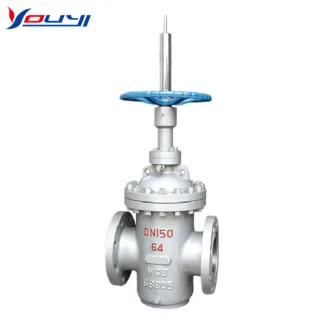
How a Gate Valve Works
What is a gate valve?
A gate valve controls the flow of media by raising the gate (opening) and lowering it (closing). gate valves are distinguished by a straight, unobstructed passage that causes minimal pressure loss across the valve. Unlike butterfly valves, the gate valve’s open bore also allows a pipe cleaner to pass through during pipe cleaning. gate valves are available in a variety of options, including various sizes, materials, temperature and pressure ratings, and gate and bonnet designs.
Gate valves work by inserting a rectangular gate or wedge into the path of the flowing fluid. They are operated by a threaded stem that connects an actuator (usually a handwheel or motor) to the stem of the gate. If the valve has a rising stem, its position can be seen by looking at the position of the stem.
Gate valves tend to be slightly cheaper than ball valves of the same size and quality. They are slower to actuate than right angle rotary valves and are suitable for applications where valve operation is infrequent, such as isolation valves. Gate valves should be used fully open or fully closed, rather than regulating flow. Automatic gate valves exist with electric or pneumatic actuators, but manual gate valves are cost-effective because they are used infrequently.
Working principle of gate valve:
As shown in the figure, the main components of the gate valve are the handwheel (A), spindle (B), gasket (C), bonnet (D), valve body (E), flange (F) and gate (G). The main operating mechanism is simple and straightforward. Turning the handwheel rotates the stem and moves the gate up or down through the threads. They require more than 360° of rotation to fully open/close the valve. Lift the gate from the flow path and the valve opens. Lowering the gate to its closed position seals the bore and causes the valve to close completely.
For gate valves, the relationship between gate vertical travel and flow rate is non-linear, with the maximum change occurring near closure. When used to regulate flow, the relatively high flow rate when partially open can cause wear on the gate and seat, as well as possible vibration of the gate, which can shorten the life of the valve.