Katana Legality by Country: 2026 Global Laws and Buying Guide
Is a Katana Legal Where You Live?
2026 Global Katana Laws, Ownership & Buying Guide
As interest in katana swords, Japanese samurai weapons, and authentic sword collecting continues to grow worldwide, many enthusiasts, martial artists, and historical collectors face an important legal question before making a purchase:
Is owning a katana legal where I live? Can I buy, import, display, or carry a samurai sword in my country?
This 2026 updated global katana legality guide explains current katana laws by country, covering ownership, import rules, display, transport, and public carry. Whether you are buying a functional battle-ready katana or a decorative samurai sword, this guide helps you stay compliant and avoid legal risks.
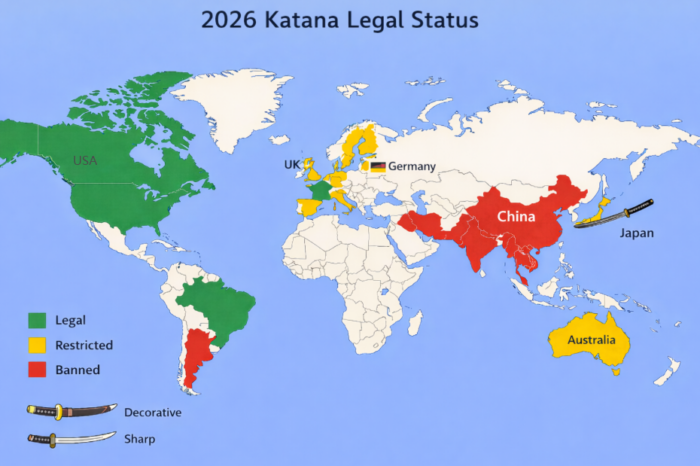
I. Global Overview: Are Katanas Legal Worldwide?
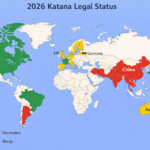
Countries around the world regulate katana swords and bladed weapons very differently. In most cases, katana laws fall into three main categories:
1. Fully Legal Katana Ownership
Some countries allow private katana ownership with few or no special restrictions, aside from minimum age requirements. These regions often treat katana as collectible weapons rather than prohibited arms.
Examples include:
Most U.S. states
Certain Eastern European countries
In these locations, owning a katana is legal, but public carry may still be restricted.
2. Restricted but Legal
Many countries allow katana ownership but impose strict regulations on:
Blade length
Sharpness
Importation
Public carry
Intended use (martial arts, display, reenactment)
Common examples include:
United Kingdom
Germany
Australia
Licensing, registration, or proof of legitimate purpose may be required.
3. Banned or Heavily Prohibited
Some countries explicitly prohibit civilian ownership of sharp swords or classify katana as illegal weapons.
Examples include:
India
United Arab Emirates
Mainland China
In these regions, importing or possessing a katana may result in confiscation or criminal penalties.
Key Legal Factors That Affect Katana Legality
Most sword laws consider:
Whether the katana is sharp or blunt
Blade length and curvature
Cultural or historical classification
Licensing or registration requirements
Storage and transport rules
II. Katana Laws by Country (2026 Update)
United States Katana Laws
At the federal level, katana are legal to buy and own in the United States. There is no nationwide ban on samurai swords. However, state and local laws vary, especially regarding:
Public carry
Concealed weapons
Blade length restrictions
States such as California and New York strictly limit carrying sharp swords in public.
👉 Important: Even in states where katana ownership is legal, carrying a katana in public can result in arrest if interpreted as threatening behavior.
United Kingdom Katana Law
UK sword law is among the most restrictive in Europe. Since legislation introduced in 2008, the sale and import of curved swords over 50 cm, including katana, is generally prohibited.
However, exemptions exist for:
Martial arts practitioners
Historical reenactment groups
Cultural or religious use
Traditionally handmade Japanese swords meeting exemption standards
Because UK katana laws are complex, buyers should always verify eligibility before purchasing or importing.
European Union Katana Laws
Katana legality varies widely across EU member states:
Germany: Ownership is legal, but a legitimate reason (such as martial arts training) may be required.
France: Ownership is allowed, but public carry requires authorization.
Italy: Katana ownership is generally legal; registration with local police may be required.
Spain: Legal to own, but transport and public carry are tightly regulated.
Always check local weapon classification laws before buying.
Canada Katana Laws
In Canada, katana are classified as bladed weapons but are legal to own. No special permit is required for ownership.
However:
Public carry must have a legitimate purpose
Transport should be direct and secure (e.g., traveling to a dojo or exhibition)
Australia Katana Laws
Australian katana laws vary by state and territory. In many regions:
Katana are classified as controlled or prohibited weapons
A weapons permit may be required
Ownership may be limited to martial arts practitioners or collectors
Always verify state-specific regulations before importing or buying.
Japan Katana Laws
Japan has some of the strictest sword laws in the world. Traditional Japanese swords (nihonto) must be:
Registered with authorities
Recorded by the police
Securely stored
Unregistered sword possession is illegal, and export is heavily regulated.
Other Regions & Global Notes
India: Civilian ownership of sharp swords is generally illegal.
Mainland China: Katana are classified as dangerous weapons and prohibited.
South Africa: Ownership is legal, but carry and usage may be regulated.
Middle East: Laws vary widely and are often strictly enforced at customs.
⚠️ In nearly all countries, public display or threatening use of a katana is illegal, even if ownership itself is permitted.
III. Decorative vs Functional Katana: Legal Differences
Understanding the difference between decorative katana and functional battle-ready katana is essential:
Decorative katana (blunt, unsharpened): Usually easier to own legally and commonly classified as collectibles.
Functional katana (sharp, full-tang): Often subject to stricter laws, permits, or bans.
In restrictive countries, decorative samurai swords are usually the safest legal option.
IV. How to Buy & Import a Katana Legally
To safely and legally purchase a katana in 2026:
Research local katana laws before buying
Choose a legally compliant blade type
Follow customs and import declaration rules
Buy from experienced katana sellers familiar with international shipping laws
Proper preparation greatly reduces the risk of seizure, fines, or legal complications.
V. Katana Legality FAQ
Q: Can I carry a katana in public?
A: Almost always no. Public carry of a sharp sword is typically illegal except for approved transport.
Q: Are antique or historical katana exempt?
A: In some regions, antique katana may receive exemptions, but proof of age and authenticity is required.
https://www.coolkatana.com
Conclusion: Legal & Responsible Katana Ownership
Understanding katana ownership laws in your country is essential before buying or importing a samurai sword. Sword laws continue to evolve in 2026, especially regarding weapons and public safety.
By staying informed, choosing legally compliant swords, and respecting local regulations, you can enjoy katana collecting responsibly, safely, and legally—while honoring the cultural legacy of this iconic Japanese weapon.