Khopesh Sword: Ancient Egyptian Curved Blade & Combat Power
Khopesh Sword: The Ancient Egyptian Curved Blade That Dominated Bronze Age Warfare
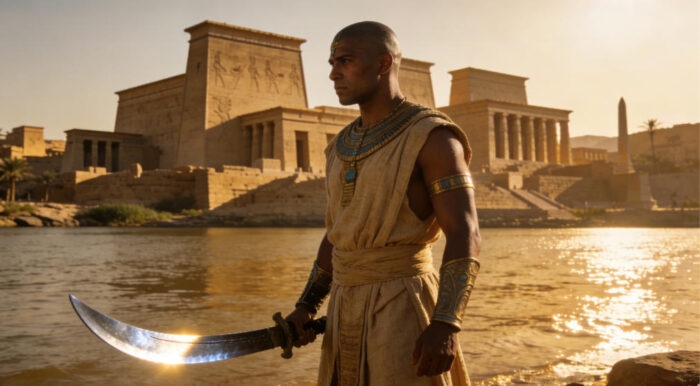
The khopesh sword, one of the most recognizable weapons in ancient history, stands as a powerful symbol of ancient Egyptian warfare, royal authority, and military innovation. Known for its distinctive curved blade design, the Egyptian khopesh was more than just a weapon—it was a tactical masterpiece that combined the power of an axe with the precision of a sword.
In this in-depth guide, we explore the history of the khopesh sword, its unique design, battlefield tactics, and why this ancient Egyptian curved sword continues to fascinate historians, collectors, and weapon enthusiasts today.
What Is a Khopesh Sword?
The khopesh sword is a sickle-shaped ancient Egyptian weapon that originated during the Bronze Age. Measuring approximately 50–60 cm (20–24 inches) in length, it features a distinctive curved profile with a sharpened outer edge and a blunt inner curve.
Unlike straight swords, the khopesh weapon evolved from earlier battle axes, giving it a hybrid form that excels in both chopping and slashing combat.
Key Features of the Khopesh:
Unique crescent or sickle-shaped blade
Outer edge sharpened for powerful cuts
Thick spine for durability
Forward-weighted balance for stronger strikes
Designed for close combat and tactical control
This combination made the ancient Egyptian khopesh sword one of the most effective weapons of its time.
Origins of the Ancient Egyptian Khopesh
Although strongly associated with Egypt, the khopesh sword did not originate there. Its earliest forms appeared in Mesopotamia and the Levant, later introduced into Egypt during the Second Intermediate Period.
By the time of the New Kingdom of Egypt (c. 1550–1070 BCE), the Egyptian khopesh had become a standard weapon among soldiers and was frequently depicted in the hands of pharaohs.
The weapon quickly evolved into both a military tool and a ceremonial symbol, often associated with power, victory, and divine authority.
Khopesh Sword Design: Why the Curved Blade Matters
The defining feature of the khopesh sword is its curved blade, which provides several tactical advantages over straight swords.
1. Hooking and Controlling Enemies
The inner curve of the khopesh weapon allows warriors to:
Hook an opponent’s shield
Pull enemies off balance
Trap limbs or weapons
This gave Egyptian soldiers a major advantage in close-quarters combat.
2. Enhanced Cutting Power
The forward curve concentrates force toward the tip, delivering devastating slashing and chopping attacks, similar to an axe.
3. Hybrid Weapon Efficiency
The ancient Egyptian curved sword effectively combines:
Axe-like impact force
Sword-like maneuverability
Hooking capabilities for tactical control
This versatility made the khopesh sword superior to many contemporary Bronze Age weapons.
How the Khopesh Was Used in Combat
The khopesh sword was primarily a close-range weapon, ideal for chaotic battlefield conditions.
Combat Techniques:
Slash attacks: Wide, sweeping cuts to injure or disable enemies
Hook-and-strike: Pulling shields aside before delivering a killing blow
Disarming moves: Trapping weapons using the curved blade
Shield breaking: Using momentum to break defensive lines
Because armor was limited during the Bronze Age, the khopesh weapon was especially effective against lightly protected opponents.
Symbolism of the Egyptian Khopesh
Beyond its battlefield use, the khopesh sword held deep symbolic meaning in ancient Egyptian culture.
Frequently depicted in temple carvings and tomb paintings
Associated with pharaohs as a sign of divine power and authority
Represented the triumph of order over chaos
Many ceremonial khopesh swords were found in royal tombs, including those of elite rulers, highlighting their cultural importance.
Materials and Evolution
Originally crafted from bronze, the ancient Egyptian khopesh sword later saw limited use of iron as metallurgy advanced.
Material Characteristics:
Bronze: Durable and capable of holding an edge
Iron (later period): Stronger but less common in early Egypt
The weapon’s design remained largely consistent, proving its effectiveness across centuries.
Khopesh vs Other Ancient Swords
Compared to other ancient weapons, the khopesh sword stands out for its unique design and tactical advantages.
Weapon Type Strength Weakness Khopesh Advantage
Straight sword Good thrusting Limited control Better hooking ability
Axe High impact Less versatile Combines impact + control
Spear Long reach Weak in close combat Superior at close range
This versatility helped the Egyptian khopesh dominate Bronze Age battlefields.
Why the Khopesh Sword Still Matters Today
Today, the khopesh sword remains one of the most iconic weapons in history. Its influence can be seen in:
Modern curved swords like the kopis and scimitar
Historical weapon collections and museums
Movies, games, and fantasy weapons
Collectors and enthusiasts value the ancient Egyptian khopesh for its:
Unique shape
Historical significance
Cultural symbolism
Conclusion
The khopesh sword is far more than an ancient weapon—it is a testament to early innovation in warfare and design. With its distinctive curved blade, powerful combat functionality, and symbolic importance, the ancient Egyptian khopesh stands as one of the most effective and recognizable weapons of the Bronze Age.
From battlefield dominance to royal symbolism, the khopesh weapon continues to capture the imagination of historians, collectors, and martial enthusiasts around the world.
https://www.coolkatana.com/