Naginata History, Samurai Techniques & Cultural Legacy
Ultimate Guide to the Naginata: Japanese Polearm History, Samurai Techniques & Cultural Significance
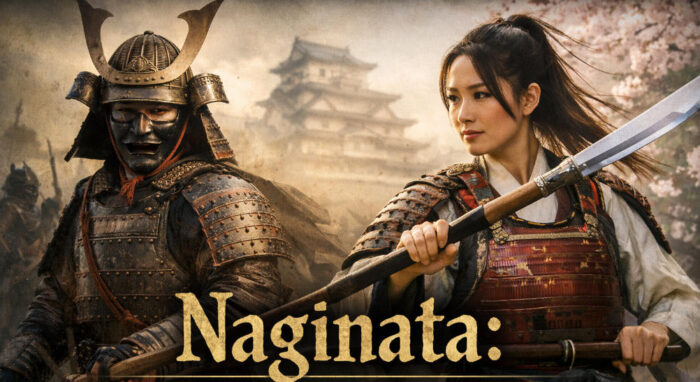
The Naginata is one of the most iconic traditional Japanese weapons in history. As a powerful Japanese polearm weapon, it combines extended reach, curved blade efficiency, and battlefield versatility. From medieval samurai warfare to modern martial arts practice, the Naginata remains a symbol of discipline, strategy, and cultural heritage.
This complete guide explores:
What the Naginata is and how it works
The history of the Naginata in feudal Japan
Core Naginata combat techniques explained
Its role in samurai martial arts training
The connection to female warriors (Onna-Bugeisha)
Modern Naginata-do and competitive practice
I. What Is a Naginata? Traditional Japanese Polearm Explained
The Naginata is a classic Japanese bladed pole weapon consisting of a long wooden shaft fitted with a curved, single-edged blade. The overall length typically ranges from 150 to 240 cm, giving it significant reach over shorter weapons like the katana.
The name “Naginata” is often interpreted as “mowing down sword,” referencing its sweeping cutting motion. Its curved blade design allows powerful slashing attacks, fluid transitions between strikes, and effective control of distance in close combat.
Because of its hybrid structure—part spear, part sword—the Naginata occupies a unique place in Japanese weapons history, blending cutting efficiency with polearm leverage.
II. History of the Naginata: From Battlefield Weapon to Cultural Symbol
Early Development in Feudal Japan
The Naginata first appeared during Japan’s early feudal period and became widely used by warrior monks and samurai. During medieval warfare, it was particularly effective against infantry and cavalry due to its long reach and sweeping arc.
On chaotic battlefields, maintaining distance was critical. The Naginata allowed soldiers to strike opponents before they could close in. Its blade could hook, slice, and disrupt formations, making it a versatile battlefield weapon.
Rise During the Sengoku Era
During Japan’s Warring States period, the Naginata became a standard weapon among samurai foot soldiers. However, as warfare evolved and spear formations became more dominant, its battlefield role gradually shifted.
By the peaceful Tokugawa era, the weapon transitioned from a mass-warfare tool into a symbol of martial tradition and personal defense.
III. Structure and Design: Why the Naginata Was So Effective
Understanding the anatomy of the Naginata helps explain its effectiveness:
Long Hardwood Shaft: Provides leverage and extended striking range
Curved Blade: Designed for slicing, sweeping, and controlled cuts
Balanced Weight Distribution: Enables fluid attack and defense transitions
Flexible Combat Range: Effective in both mid-range and close quarters
The combination of cutting mechanics and reach made it superior in certain combat scenarios, especially against armored or mounted opponents.
IV. Naginata Techniques Explained: Core Combat Movements
Traditional Naginata techniques focus on coordination, timing, and distance control. Unlike shorter swords, the Naginata requires full-body movement and strong footwork.
Key techniques include:
1. Sweeping Cuts
Wide horizontal arcs designed to control space or strike multiple opponents.
2. Diagonal Slashes
Powerful downward cuts aimed at shoulders or torso, using gravity and body rotation.
3. Thrusting Attacks
Direct forward strikes targeting vulnerable openings.
4. Defensive Blocks and Parries
Using both the shaft and blade to redirect or deflect attacks.
Modern martial artists often train these techniques in structured forms known as kata, emphasizing precision and control.
V. Naginatajutsu and Naginata-do: Samurai Martial Arts Training
Over time, battlefield techniques evolved into formalized martial disciplines:
Naginatajutsu
The classical combat art focused on practical fighting applications used by samurai. It preserves historical techniques and traditional combat principles.
Naginata-do
A modern budō practice emphasizing character development, etiquette, discipline, and spiritual growth. Today, Naginata-do is practiced in dojos worldwide and includes sparring, ranking systems, and international competitions.
Training strengthens:
Coordination and balance
Core strength and endurance
Mental focus and discipline
Understanding of Japanese martial philosophy
For those researching traditional Japanese martial arts weapons, the Naginata offers both historical depth and modern athletic challenge.
VI. The Onna-Bugeisha: Female Warriors and the Naginata
One of the most distinctive aspects of Naginata history is its association with female samurai warriors known as Onna-Bugeisha.
Women of samurai families were often trained in Naginata techniques for home defense and protection during times of war. The weapon’s long reach made it effective in defensive scenarios, especially within castle grounds or narrow entrances.
Over centuries, the Naginata became culturally linked with female martial strength, education, and discipline. Even today, many Naginata practitioners are women, continuing this historic legacy.
VII. Modern Competitive Naginata and Global Practice
In the modern era, Naginata has evolved into a structured competitive martial art. Practitioners wear protective armor and use bamboo training weapons during sparring.
Contemporary training focuses on:
Technical accuracy
Controlled strikes
Respect and etiquette
Physical conditioning
Mental resilience
International federations promote standardized rules and ranking systems, helping preserve this traditional Japanese weapon art on a global scale.
For martial arts enthusiasts searching for Naginata training near me, interest has grown significantly in recent years due to renewed appreciation for classical weapons and cultural heritage disciplines.
VIII. Cultural Significance of the Naginata
Beyond its practical use, the Naginata represents:
Samurai honor and warrior discipline
Balance between strength and grace
Cultural continuity across generations
The evolution of Japanese martial philosophy
Collectors, historians, reenactors, and martial artists all value the Naginata not just as a weapon, but as a symbol of Japan’s warrior past.
Conclusion: Why the Naginata Still Matters Today
From medieval battlefields to modern martial arts dojos, the Naginata has undergone a remarkable transformation. What began as a powerful feudal Japanese polearm is now a respected martial art and cultural symbol.
Whether you are studying Japanese weapon history, exploring samurai martial arts techniques, or seeking to understand the legacy of traditional bladed weapons, the Naginata stands as one of the most fascinating and enduring arms in world history.
Its combination of reach, precision, and cultural meaning ensures that the Naginata will continue to inspire martial artists and history enthusiasts for generations to come.
Hand Forged Japanese 47inch Naginata Sword 1095 High Carbon Steel Blade Alloy Tsuba
Hand Forged Japanese 47inch Naginata Sword 1095 High Carbon Steel Blade Alloy Tsuba