Sword Hilts Explained: Structure, History, and Forging Craftsmanship
Sword Hilts Explained: Structure, History, and Forging Craftsmanship
The sword hilt is one of the most important structural elements of any sword. While the blade delivers the cutting or thrusting power, the hilt determines how effectively the weapon can be controlled. The design of the sword handle, including its guard, grip, and pommel, plays a vital role in balance, safety, and combat performance.
Throughout history, different cultures have developed unique hilt designs suited to their combat styles and metallurgy. From medieval European swords to the Japanese katana and Chinese jian, the evolution of the sword hilt structure reflects centuries of weapon innovation and craftsmanship.
In this guide, we explore the parts of a sword hilt, its historical development, and the traditional techniques used in sword forging and hilt construction.
What Is a Sword Hilt?
The hilt of a sword refers to the entire handle assembly that allows the user to hold and control the weapon. It connects the blade to the wielder’s hand and serves as the control center for the sword.
A traditional sword hilt typically consists of three main components:
Grip (Handle) – the section held by the hand
Guard – the protective element between blade and hand
Pommel – the weighted end piece that balances the sword
Together, these components form a system that determines the sword’s handling characteristics, balance, and maneuverability.
In historical weapon terminology, the hilt is sometimes referred to as the sword handle assembly or sword mounting system.
Anatomy of a Sword Hilt
Understanding the anatomy of a sword hilt helps collectors, historians, and martial artists better appreciate how swords function. Each component contributes to the overall performance and safety of the weapon.
The Guard: Hand Protection and Blade Control
The sword guard is the component located between the blade and the grip. Its primary function is to protect the wielder’s hand from an opponent’s blade.
The guard also prevents the user’s hand from sliding forward onto the blade during powerful thrusts or cuts.
Common Guard Designs
Different historical periods introduced various guard styles:
Crossguard – common on medieval European arming swords and longswords
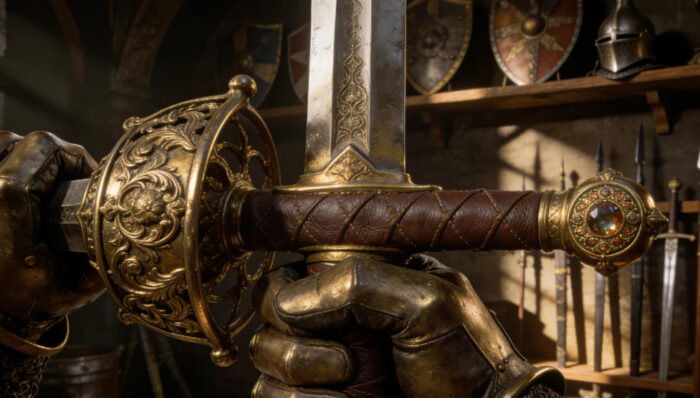
Basket hilt – a protective cage surrounding the hand
Cup hilt – used on rapiers for dueling protection
Disk guard or tsuba – typical on Japanese swords
In many sword fighting traditions, guards also played a tactical role by deflecting, trapping, or redirecting enemy blades.
The Grip: Ergonomics and Control
The sword grip is the portion of the hilt held by the user. It determines comfort, control, and grip stability during combat.
Historically, grips were constructed using a wooden core that was mounted around the blade’s tang. The surface was then wrapped with materials designed to improve traction.
Common Grip Materials
Traditional sword grips often used:
hardwood cores
leather wrapping
cord reinforcement
wire binding
rayskin or sharkskin coverings
These materials provided a secure and non-slip grip, which was essential in battlefield conditions.
Cultural Variations in Grip Design
Different civilizations adapted the grip length and design according to fighting techniques.
European swords
shorter grips for one-handed use
leather wrapping for durability
occasional metal wire reinforcement
Japanese swords
long two-handed grips
rayskin underlayer for texture
silk or cotton cord wrapping
Chinese swords
often featured wooden grips covered with rayskin
some designs included decorative tassels attached to the pommel
These differences highlight how sword ergonomics evolved alongside martial traditions.
The Pommel: Balance and Structural Strength
The pommel is the weighted component located at the end of the sword handle. Although it is often decorative, the pommel serves several crucial mechanical functions.
Functions of the Pommel
The pommel helps to:
counterbalance the blade
secure the hilt assembly
prevent the sword from slipping from the hand
reinforce the structural stability of the weapon
By adjusting the pommel’s size and weight, swordsmiths could shift the sword’s center of gravity, improving handling speed and control.
In close combat situations, the pommel could also be used as a striking tool.
The Hidden Structure: Tang and Internal Construction
Inside the hilt lies one of the most important structural elements of the sword—the tang.
The tang is the extension of the blade that runs through the grip and connects the blade to the hilt assembly.
In most traditional swords:
the tang passes through the grip core
the guard rests against the base of the blade
the pommel secures the entire structure together
Two common construction methods include:
Peened tang
The end of the tang is hammered flat over the pommel, permanently locking the components together.
Threaded tang
The tang contains threads, allowing the pommel to screw onto the handle assembly.
Both methods ensure that the sword functions as a single integrated weapon capable of withstanding combat stress.
Historical Evolution of Sword Hilts
The design of sword hilts evolved significantly over thousands of years. Changes in warfare, armor technology, and fighting techniques influenced how hilts were constructed.
Early Sword Handles
Early Bronze Age swords had relatively simple handles with minimal guards. Warriors relied heavily on shields, so hand protection was less critical.
Medieval Sword Hilts
During the medieval period, the crossguard design became standard in European swords.
This simple yet effective structure provided:
better hand protection
improved blade control
structural strength
Pommel shapes also diversified during this era. Popular forms included:
wheel pommels
Brazil-nut pommels
scent-stopper pommels
These shapes helped balance the sword while also serving as decorative elements.
Renaissance Complex Hilts
As armor declined and civilian dueling became more common, sword hilts became more elaborate.
Swordsmiths developed advanced guard systems such as:
swept hilts
basket hilts
cup hilts
These designs offered greater protection for the hand and reflected the refined techniques of fencing.
Materials Used in Sword Hilt Construction
Sword hilts were crafted from materials chosen for durability, weight, and visual appeal.
Grip Materials
hardwood
leather
rayskin
cord or wire wrapping
Guard and Pommel Materials
steel
iron
brass
bronze
In ceremonial swords and royal weapons, hilts were often decorated with precious metals, engraving, and gemstones.
Traditional Sword Hilt Forging Process
Creating a high-quality sword hilt requires skilled craftsmanship and careful assembly.
Forging the Guard
The guard is usually forged or cast from metal and shaped to fit tightly around the blade’s tang.
Crafting the Grip Core
The grip core is carved from wood and fitted around the tang. It is then wrapped with leather, cord, or other materials to create a secure surface.
Attaching the Pommel
The pommel is installed using techniques such as:
tang peening
threaded pommel construction
riveted assembly
This step locks all hilt components together and ensures the sword’s structural stability.
Why Sword Hilt Design Is Important
The design of the sword hilt directly affects how the weapon performs.
A well-crafted hilt provides:
proper sword balance
comfortable handling and grip control
effective hand protection
long-term structural durability
For sword collectors, historians, and martial arts practitioners, understanding the structure of sword hilts reveals the sophisticated engineering behind historical weapons.
Conclusion
The sword hilt is far more than a simple handle. It is a carefully engineered system that connects the wielder to the blade.
Through the integration of the guard, grip, pommel, and tang, swordsmiths created weapons that were balanced, durable, and effective in combat.
Across cultures and centuries, the evolution of the sword hilt design reflects the ingenuity of weapon makers and the changing demands of warfare.
Today, whether studying historical swords, martial arts weapons, or modern replicas, the craftsmanship of the sword hilt remains one of the most fascinating aspects of blade design.
https://www.coolkatana.com/