Why Sudoku Became My Favorite Way to Relax
I Never Thought I Would Enjoy Number Puzzles
A year ago, if someone asked me about puzzle games, I probably would have talked about crosswords, word games, or maybe those random mobile games people play while waiting for food delivery. Number puzzles were never really my thing. They looked complicated and honestly a little intimidating.
Then one rainy evening changed everything.
I was stuck at home with terrible weather outside, nothing interesting to watch, and my phone battery too low for endless scrolling. Out of pure boredom, I downloaded a puzzle app. I remember opening it and seeing a Sudoku section.
My first reaction was literally, “Absolutely not.”
For some reason, I always thought Sudoku was only for super serious people who enjoy solving impossible logic problems before breakfast. But after a few minutes of staring at the app, curiosity won.
I clicked on an easy puzzle.
And somehow, that small decision turned into a strange little obsession.
The First Puzzle Was a Disaster
I wish I could say I immediately understood how everything worked.
I didn’t.
Not even close.
At first, I kept forgetting the basic rules. I accidentally repeated numbers in rows. I guessed randomly when I got impatient. I restarted the board multiple times because I made mistakes too early.
At one point, I became convinced the app itself was broken.
Turns out I was the problem.
Still, there was something satisfying about slowly figuring things out. Every time I completed one small section of the board, my brain got this tiny reward. It felt like cleaning a messy room one corner at a time.
That feeling surprised me.
Most games today try so hard to keep your attention with noise, rewards, flashing colors, or constant notifications. This puzzle felt quiet.
It asked me to slow down.
And honestly, I think that’s why I liked it.
The Strange Calmness of Sudoku
One thing I didn’t expect was how relaxing the game could be.
People usually think logic games are stressful, but for me, it became the opposite.
After long workdays, my brain often feels overloaded. Too many tabs open mentally. Too many unfinished thoughts.
But when I sit down with a puzzle, everything becomes simpler.
There’s only one goal.
Find the next correct number.
That’s it.
No drama. No chaos. Just quiet concentration.
Sometimes I even play before sleeping because it helps me disconnect from social media and endless scrolling.
Of course, not every moment feels peaceful.
Some puzzles are incredibly frustrating.
I once spent nearly forty-five minutes trying to solve a difficult board late at night. I checked every row repeatedly and still couldn’t move forward.
Eventually I got so annoyed that I threw my phone onto the bed dramatically like I was quitting forever.
Five minutes later, I picked it up again.
Because apparently my brain refuses to lose arguments against number grids.
The Satisfaction Is Ridiculously Good
People who don’t play puzzle games probably won’t understand this feeling.
But finishing a hard board feels amazing.
Especially when you’ve been stuck for a long time.
You stare at the final empty space, place the last number, and suddenly the entire puzzle makes sense. Everything connects perfectly.
It’s such a small thing, but the satisfaction feels real.
One of my favorite moments happened during a weekend coffee shop visit.
I had ordered an iced latte and planned to relax for maybe twenty minutes before going home.
Instead, I opened a difficult puzzle and completely lost track of time.
At some point, the barista actually walked over to my table because my drink had been sitting at the counter for almost ten minutes.
Meanwhile, I was sitting there staring intensely at a single square like it contained the secrets of the universe.
Honestly, embarrassing.
But also kind of funny.
That’s the thing about Sudoku.
Once you become focused, the outside world disappears for a while.
The Biggest Mistakes I Made as a Beginner
Looking back, I made every classic beginner mistake possible.
Guessing Randomly
This was my biggest problem.
Whenever I got impatient, I would just place numbers based on instinct.
Terrible idea.
Maybe it worked temporarily, but eventually the entire puzzle collapsed because one wrong number ruined everything.
After enough painful restarts, I learned that patience matters more than speed.
Ignoring Pencil Marks
At first, I thought using notes looked unnecessary.
Why write down possibilities when I could “remember them mentally”?
That confidence disappeared very quickly.
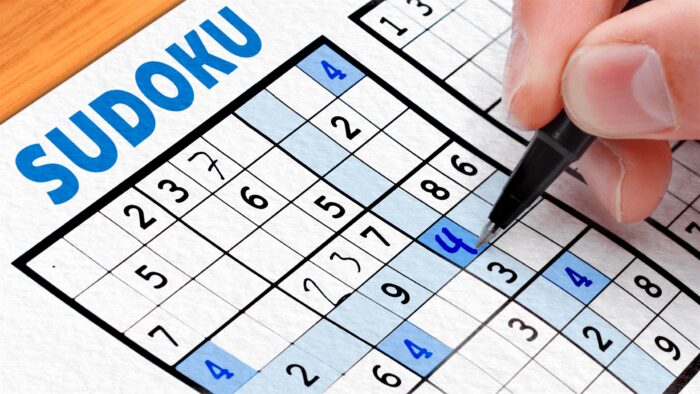
The moment I started using pencil marks properly, difficult boards suddenly became much easier to understand. Instead of trying to keep everything inside my head, I could actually organize information visually.
It felt like finally cleaning my desk after working in chaos for hours.
Focusing Too Hard on One Area
Another mistake I made was staring at the same section forever.
Sometimes the answer isn’t where you’re looking.
I learned that stepping back and checking the entire board often reveals clues you completely missed before.
Oddly enough, this became useful outside games too.
Sometimes real-life problems work the same way.
Why I Keep Coming Back to It
What keeps me returning isn’t just the challenge.
It’s the balance between focus and relaxation.
Some games make me feel more stressed after playing them. This one usually does the opposite.
Even difficult puzzles feel satisfying because every solution comes from logic rather than luck.
I also like how simple everything is.
No complicated tutorials.
No expensive equipment.
No internet required most of the time.
Just numbers, patterns, and patience.
And somehow that’s enough to keep my brain entertained for hours.
There’s also something rewarding about improving slowly over time.
When I first started, easy boards felt impossible.
Now I can finish them pretty comfortably while drinking coffee or listening to music.
Hard puzzles still destroy my confidence sometimes, though.
Especially the expert-level ones.
Those things feel personal.
Unexpected Lessons From Playing
I know it sounds dramatic to learn life lessons from a puzzle game, but honestly, I think I did.
The biggest lesson was patience.
You can’t rush solutions.
You can’t force logic.
Sometimes you need to stop, breathe, and look carefully instead of reacting emotionally.
That mindset actually helped me outside gaming too.
When work becomes overwhelming, I try breaking problems into smaller pieces instead of panicking immediately.
One step at a time.
One square at a time.
I also realized how rare quiet focus has become.
Most of us constantly switch between apps, notifications, videos, and conversations all day long.
Sitting quietly with a puzzle for thirty minutes feels surprisingly refreshing now.
It gives my brain space to slow down.
And honestly, I didn’t realize how much I needed that.
Final Thoughts
If you had told me a year ago that I would genuinely enjoy solving number puzzles for fun, I probably would have laughed.
But now, it’s become one of my favorite ways to relax after stressful days.
Some nights I solve easy boards casually before sleeping.
Other nights I become weirdly competitive against difficult puzzles and refuse to quit until I finish them.
It’s frustrating sometimes.