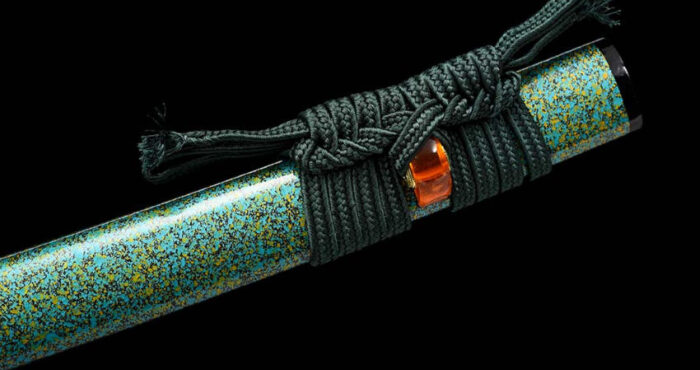
Why the Saya Is the Soul’s Guardian in Japanese Katana Culture
Why the Saya Is Regarded as the Spiritual Extension of the Katana in Japanese Sword Culture
In the long and profound history of Japanese samurai sword culture, the katana has always been revered as the very soul of the warrior. However, what truly safeguards that soul is often overlooked — the saya, the traditional Japanese katana scabbard.
Far beyond a simple protective sheath, the katana saya embodies spiritual restraint, social identity, artistic refinement, and philosophical balance. In traditional Japan, the saya was never an accessory; it was an inseparable counterpart to the blade itself — a silent guardian where history, craftsmanship, and Bushidō philosophy converge.
What Does “Saya” Mean in Japanese Sword Terminology?
The word Saya (鞘) refers to the scabbard of a samurai sword, designed to house and preserve the blade when not in use.
Within traditional Japanese sword culture, the saya holds multiple layers of meaning:
Protection & Preservation – A properly crafted saya prevents corrosion, absorbs moisture, and allows safe carry of a real katana.
Philosophical Balance – The blade represents yang (power, action), while the saya represents yin (restraint, calm). Together, they reflect the samurai’s disciplined spirit.
Aesthetic Expression – Traditionally made from magnolia wood and finished with urushi lacquer, the saya often features sageo cords, kamon (family crests), or shell inlays, expressing rank and individuality.
In essence, the saya functions as the spiritual garment of the katana — protecting, concealing, and refining its power.
The Historical Evolution of the Saya
The origins of the Japanese sword saya date back to the Heian period (794–1185), when swords evolved from battlefield tools into symbols of honor, identity, and moral discipline.
As the curvature and forging techniques of the katana advanced, the saya evolved alongside it — both functionally and symbolically.
Sengoku Period: Identity Through the Scabbard
During the Sengoku (Warring States) period, the saya became a visible marker of social standing:
High-ranking samurai favored elaborately lacquered saya with gold dust, silver accents, and heraldic motifs.
Rōnin and foot soldiers carried plain wooden saya, prioritizing practicality over decoration.
Daimyō and nobility commissioned ceremonial saya adorned with raden inlays and family crests, transforming swords into symbols of legacy.
Colors also carried meaning:
Black saya symbolized discipline and solemn authority
Red saya reflected courage and unyielding loyalty
Natural wood saya embodied humility and purity
Each saya silently conveyed its owner’s values before the sword was ever drawn.
The Philosophical Meaning Behind the Saya
In Japanese thought, the relationship between blade and scabbard reflects the harmony of opposing forces:
“The sword rests within the saya; the heart remains still.”
The katana represents decisive action, while the saya embodies control and mercy.
A true swordsman, according to Bushidō, is not defined by violence — but by the wisdom to restrain it.
Thus, the katana scabbard becomes a symbol of emotional mastery:
Concealment of aggression
Respect for life
Calm governing strength
This concept remains deeply influential in iaido, kenjutsu, and modern martial arts practice.
The Cultural Symbolism of the Saya
The saya serves as a mirror of the samurai’s inner world:
A Symbol of Status
Materials, lacquer techniques, and ornamentation instantly revealed rank and lineage. Even the placement of the sageo reflected etiquette and social awareness.
A Symbol of Spirit
By hiding the blade’s lethal edge, the saya represents the principle of softness controlling strength — a core teaching of Bushidō philosophy.
An Artistic Statement
From minimalist natural wood finishes to luxurious lacquered masterpieces, every saya reflects its owner’s aesthetic taste and spiritual outlook.
In Japanese culture, beauty and restraint are inseparable — and the saya is where they meet.
Traditional Craftsmanship of the Japanese Saya
1. Material Selection: Precision From Nature
Traditional katana saya are crafted from magnolia wood or hinoki cypress, chosen for their moisture-absorbing properties and lightweight durability.
The interior is meticulously carved to fit the blade perfectly — tight enough for security, smooth enough for effortless drawing.
This flawless fit is a hallmark of authentic handmade katana craftsmanship.
2. Urushi Lacquer: Protection Through Patience
Natural urushi lacquer is applied in multiple layers, each carefully dried and polished.
Common lacquer styles include:
Black lacquer saya – authority and calm
Red lacquer saya – bravery and devotion
Colored saya (green, blue, etc.) – harmony with nature and individuality
For elite samurai, gold powder and shell inlays elevated the saya into a collectible work of art.
3. Sageo and Metal Fittings
The sageo cord secures the saya to the obi and plays a crucial role in etiquette and ceremonial sword handling.
Metal fittings such as:
Koiguchi (mouth)
Kurikata (cord knob)
Kojiri (end cap)
reinforce structure while reflecting historical styles and regional schools.
4. Harmony Between Blade and Saya
A master craftsman seeks perfect unity:
Smooth, silent drawing
Stable, respectful sheathing
This harmony defines the soul of a traditional Japanese katana.
The Role of the Saya in Combat and Ceremony
In feudal Japan:
Katana were worn edge-up for rapid response
Placing the sheathed sword down signaled peaceful intent
Drawing the blade without reason was considered dishonorable
In martial arts today, saya control remains fundamental — reinforcing mindfulness and intent.
Handmade Sanctuary Blade Katana – 1060 Carbon Steel with Green Saya
The Handmade Sanctuary Blade Katana Sword combines traditional Japanese swordmaking techniques with refined modern craftsmanship.
Key Highlights:
1060 carbon steel blade, hand-forged and full tang
Excellent balance for practice, display, or collection
Green lacquer saya, symbolizing vitality, balance, and harmony with nature
Traditional tsuka wrap and minimalist tsuba design
This katana with green saya is ideal for collectors, martial artists, cosplay enthusiasts, and admirers of authentic samurai aesthetics.
Conclusion: The Way of the Saya
“When the sword returns to the saya, peace is restored.”
The saya is not merely where the blade rests — it is where discipline lives.
Understanding the Japanese katana scabbard is essential to understanding the samurai spirit itself.
Power without restraint is chaos; restraint without power is weakness.
The katana and its saya exist to remind us of this eternal balance.
Whether you are a katana collector, anime sword fan, or Japanese culture enthusiast, a sword with a thoughtfully crafted saya is more than an object — it is a philosophy held in your hands.
Katana Green Sanctuary Blade Katana with Green Saya
A timeless symbol of strength, serenity, and devotion — where the soul of the warrior finds its home.
Handmade Sanctuary Blade Katana Sword 1060 Carbon Steel Samurai Sword Full Tang Green Saya