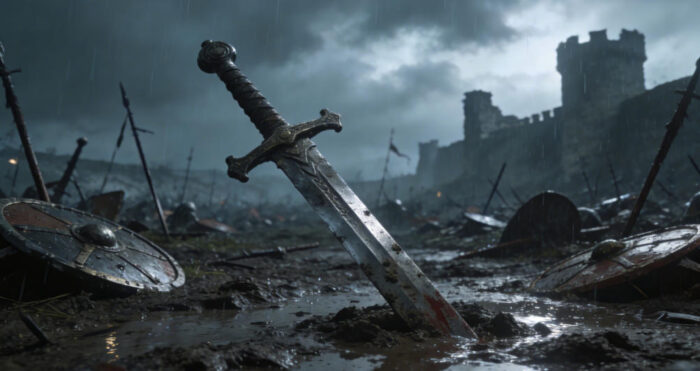
Zweihänder Sword: Legendary German Two-Handed Renaissance Weapon
Zweihänder Sword: The Legendary German Two-Handed Sword of the Renaissance Battlefield
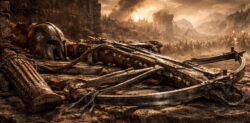
Among the most iconic weapons of the Renaissance era, the Zweihänder sword stands out as a symbol of raw battlefield power, elite warriors, and the evolution of European martial weapons. Often called the German two-handed sword, this massive blade dominated battlefields during the 16th century and became closely associated with the famous Landsknecht mercenaries of the Holy Roman Empire.
Today, the Zweihander sword, sometimes spelled Zweihänder, Bidenhänder, or Doppelhänder, is widely recognized by historians, collectors, and martial artists interested in historical European weapons, greatswords, and medieval two-handed swords.
This guide explores the history, design, battlefield role, and modern legacy of the Zweihänder, revealing why it remains one of the most legendary swords ever created.
Origins of the Zweihänder Sword
The Zweihänder sword emerged during the late Middle Ages and reached its peak during the Renaissance period, especially throughout the 16th century. Its development was closely linked to the changing nature of warfare in Europe.
The weapon evolved from the late medieval longsword, gradually increasing in size and power as armor improved and infantry tactics evolved. By the early Renaissance, weapon makers had created extremely large swords designed specifically for two-handed combat.
The name “Zweihänder” comes from the German words:
Zwei – meaning “two”
Händer – meaning “hands”
Literally translated, it means “two-handed sword.”
Other historical names for this weapon include:
Doppelhänder (double-hander)
Beidhänder (both-hander)
Bidenhänder
Although the terminology varied across regions, the weapon type was widely recognized as one of the most powerful European greatswords ever used.
The Landsknecht and the Zweihänder
The Zweihander sword is inseparable from the history of the German Landsknechts, professional mercenary soldiers who fought across Europe during the Italian Wars (1494–1559).
These mercenaries served the Holy Roman Empire and were famous for their colorful uniforms, disciplined formations, and formidable battlefield weapons.
Among them were elite soldiers known as Doppelsöldner, meaning “double-pay men.” These warriors received higher wages because they performed extremely dangerous tasks on the battlefield.
Their primary mission included:
Breaking enemy pike formations
Cutting down long spears
Opening gaps in tightly packed infantry lines
Leading assaults against fortified enemy positions
Because of the enormous strength and training required to wield such a weapon, only experienced fighters were trusted with the Zweihänder greatsword.
Size and Dimensions of the Zweihänder Sword
One of the most striking aspects of the Zweihander sword is its enormous size.
Typical dimensions included:
Total length: 150–180 cm (sometimes over 200 cm)
Blade length: around 100–130 cm
Weight: typically around 2–3 kg
Some ceremonial versions could weigh significantly more and were used primarily for display rather than combat.
Despite its intimidating appearance, the sword was carefully balanced. Skilled warriors could swing it with surprising speed and control, using wide arcs and powerful cuts to dominate the battlefield.
Because of its size, the weapon was often carried over the shoulder rather than in a sheath, similar to a polearm.
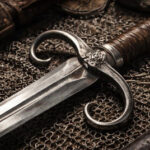
Distinctive Features of the Zweihänder Greatsword
The German Zweihänder sword has several distinctive design elements that set it apart from other medieval weapons.
Long Two-Handed Grip
The extended grip allowed warriors to use both hands for greater leverage and power. This design also enabled advanced sword techniques such as half-swording and powerful sweeping strikes.
Parrying Hooks (Parierhaken)
Many Zweihänders featured parrying hooks near the base of the blade. These metal protrusions helped catch or deflect enemy weapons and provided additional hand protection during close combat.
Ricasso Section
The ricasso is the unsharpened section of the blade above the guard. Fighters could grip this area for improved control, effectively shortening the weapon during tight combat situations.
Large Crossguard
The sword usually included a large crossguard designed to protect the wielder’s hands and assist in trapping or controlling enemy blades.
Flamberge Blade Variants
Some Zweihänders featured a wavy blade design, known as a Flammenschwert or flamberge. These blades produced additional vibration during contact and may have made it harder for opponents to parry effectively.
Battlefield Role of the Zweihänder
The Zweihänder sword played a unique tactical role during Renaissance warfare.
Unlike smaller swords used for dueling or cavalry combat, this massive weapon functioned almost like a hybrid between a sword and a polearm.
Its primary battlefield uses included:
Breaking Pike Formations
One of the most important functions of the Zweihänder was disrupting pike formations. Large sweeping strikes could knock aside or cut through spear shafts, allowing friendly soldiers to advance.
Clearing Space in Battle
The weapon’s long reach allowed warriors to control large areas of the battlefield, forcing opponents to keep their distance.
Fighting Multiple Opponents
Because of its length and momentum, the sword could deliver devastating wide attacks capable of striking multiple enemies.
Shock Infantry Weapon
In many cases, Zweihänder fighters served as shock troops, leading assaults and breaking enemy lines before regular infantry moved in.
Training and Martial Skill
Using a Zweihander greatsword required extraordinary strength, coordination, and technical skill.
Historical fencing traditions in the German martial arts schools taught specialized techniques for two-handed swords. Soldiers trained extensively to control the blade’s weight and maintain balance during combat.
In some cases, warriors received official certification as “Masters of the Long Sword.” These elite fighters were among the most respected warriors in Renaissance armies.
Today, modern practitioners of Historical European Martial Arts (HEMA) study similar techniques to recreate authentic combat methods using training swords.
Decline of the Zweihänder
By the late 16th and early 17th centuries, the Zweihander sword gradually disappeared from active battlefield use.
Several factors contributed to its decline:
The rise of firearms
Changing infantry tactics
The dominance of pike and shot formations
Increasing use of lighter sidearms
Eventually, the massive two-handed sword became primarily a ceremonial weapon used by guards, city officials, and military institutions.
The Zweihänder in Modern Culture
Although it vanished from real warfare centuries ago, the Zweihander greatsword remains extremely popular in modern media and historical studies.
It frequently appears in:
Fantasy films and television
Video games and RPGs
Historical reenactments
Medieval festivals
HEMA training schools
Because of its dramatic size and imposing design, the sword is often portrayed as the ultimate giant sword of medieval Europe.
Collectors and enthusiasts continue to admire the weapon as a masterpiece of Renaissance weapon engineering and martial culture.
Legacy of the Legendary German Greatsword
The Zweihänder sword represents the final evolution of the European two-handed sword tradition. Combining immense size, advanced metallurgy, and sophisticated martial techniques, it stands as one of the most impressive weapons ever used on the battlefield.
From the Landsknecht mercenaries who wielded it to modern historical weapon collectors, the Zweihänder remains a powerful symbol of Renaissance warfare and European martial heritage.
Even centuries later, this legendary German two-handed greatsword continues to capture the imagination of historians, martial artists, and weapon enthusiasts around the world.
https://www.coolkatana.com/