Aztec Macuahuitl: Deadly Obsidian Sword of Warriors
Aztec Macuahuitl: The Deadly Obsidian Sword of Mesoamerican Warriors
In the world of ancient weapons, few arms are as fascinating and fearsome as the Aztec Macuahuitl, often described as an obsidian sword of extraordinary sharpness. Used by elite Aztec warriors in pre-Columbian Mesoamerica, this weapon combined innovative design, brutal cutting power, and deep cultural symbolism. Today, the Macuahuitl remains one of the most searched ancient weapons in topics related to Aztec weapon history, Mesoamerican warfare, and prehistoric sword design.
What Is the Aztec Macuahuitl?
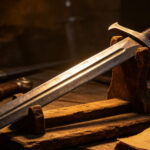
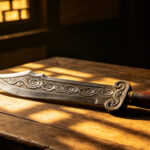
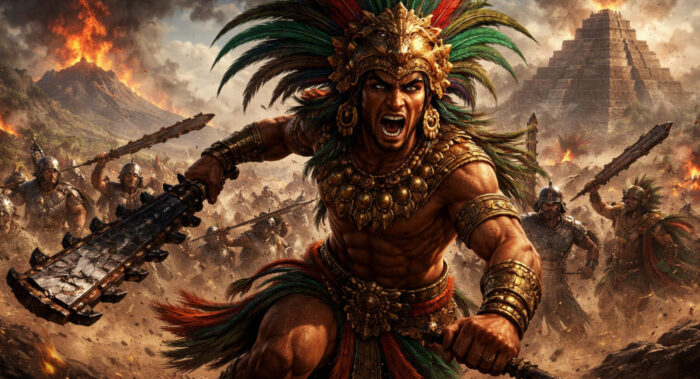
The word Macuahuitl comes from the Nahuatl language, meaning “hand-wood.” Unlike a traditional steel sword, the Macuahuitl was a wooden sword-club embedded with razor-sharp obsidian blades along its edges. It functioned as both a cutting and striking weapon, making it one of the most versatile Aztec warrior weapons ever created.
Typical Macuahuitl weapons measured between 70 and 120 cm in length. Some larger, two-handed versions were even longer, allowing warriors to deliver powerful sweeping strikes in close combat. This design made it especially effective in Mesoamerican battlefield tactics, where agility and controlled strikes were essential.
Obsidian Sword Lethality: Sharper Than Steel
One of the most remarkable aspects of the Aztec Macuahuitl was its obsidian edge. Obsidian is a natural volcanic glass capable of being fractured into edges sharper than modern surgical steel. When shaped through pressure flaking, obsidian blades can achieve microscopic sharpness, producing devastating cuts.
Because of this, the obsidian sword lethality of the Macuahuitl was legendary. Spanish chroniclers described horrifying battlefield injuries caused by these blades. Although obsidian is brittle compared to steel, its cutting capacity against unarmored or lightly armored opponents was extremely effective.
Modern experimental archaeology has demonstrated that reconstructed Macuahuitl replicas can inflict deep lacerations, confirming its deadly reputation in ancient Aztec warfare.
Construction and Engineering of the Macuahuitl
The Macuahuitl represents a brilliant example of prehistoric weapon engineering. Its construction involved:
A hardwood core carved into a paddle or flat sword shape
Grooves along the edges to hold obsidian shards
Natural adhesives such as resin or bitumen to secure the blades
Carefully spaced obsidian segments creating a serrated cutting edge
This modular design meant damaged obsidian shards could be replaced individually, maintaining the weapon’s effectiveness. The wooden body also provided blunt force impact, meaning the Macuahuitl could crush as well as cut.
Such intelligent construction highlights the sophistication of Aztec military technology long before European contact.
Battlefield Role in Aztec Warfare
The Aztec military system emphasized capturing enemies rather than killing them outright, especially during ritualized “Flower Wars.” The Macuahuitl’s design was ideal for disabling opponents through deep cuts and shock.
Warriors typically carried the Macuahuitl alongside round shields and projectile weapons such as the atlatl. In close quarters combat, they relied on speed and precision. The weapon’s balance allowed controlled slashing motions, making it a fearsome tool in hand-to-hand encounters.
Against European steel armor and swords, however, obsidian had limitations. While extremely sharp, it could shatter upon striking metal. This technological gap contributed to the shifting balance during the Spanish conquest.
Symbolism and Elite Warrior Status
Beyond its practical use, the Macuahuitl symbolized honor and warrior identity. Elite Aztec soldiers—such as Jaguar and Eagle warriors—often wielded elaborately decorated versions. These were sometimes adorned with carvings, pigments, or symbolic motifs.
Obsidian itself carried spiritual meaning in Aztec cosmology, associated with sacrifice, blood, and divine power. As a result, the Macuahuitl was not merely a weapon but also a sacred object tied to ritual and status.
For historians studying Aztec culture and military hierarchy, the Macuahuitl provides crucial insight into the social structure of the empire.
Comparison to Other Ancient Swords
When comparing the Macuahuitl to European steel swords, Japanese katana, or Middle Eastern scimitars, several differences stand out:
It lacked a continuous metal blade
It combined cutting and clubbing functions
It used volcanic glass instead of forged steel
It was optimized for ritual capture warfare
While it may not match steel blades in durability, it remains one of the most unique examples of ancient sword innovation in global weapon history.
Legacy of the Aztec Obsidian Sword
No original Macuahuitl survives today. Historical records indicate that the last known specimen was lost centuries ago. However, archaeological evidence, codices, and colonial illustrations preserve its image.
Today, the Macuahuitl continues to inspire historians, reenactors, collectors, and enthusiasts of ancient Mesoamerican weapons. It frequently appears in documentaries, historical research, and popular culture as a symbol of Aztec military power.
Conclusion
The Aztec Macuahuitl obsidian sword stands as one of the most extraordinary weapons in ancient history. Its razor-sharp volcanic glass edges, innovative engineering, and cultural importance make it a defining icon of Mesoamerican warriors and Aztec weapon history.
As interest grows in ancient civilizations, pre-Columbian warfare, and traditional weapon craftsmanship, the Macuahuitl continues to captivate audiences worldwide. It remains a powerful reminder that advanced weapon design did not begin with steel—long before metallurgy dominated battlefields, obsidian blades ruled the lands of Mesoamerica.
https://www.coolkatana.com/