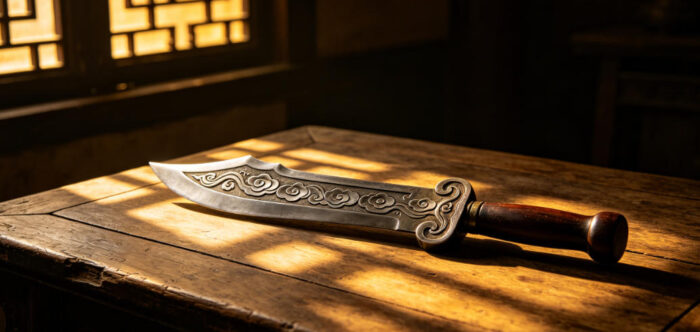
Butterfly Sword (Hudiedao): Chinese Dual Blades History & Meaning Explained
Butterfly Sword Meaning: Chinese Martial Arts Dual Blade History, Origins, and Cultural Significance
The butterfly sword (hudiedao / 蝴蝶双刀) is one of the most iconic weapons in Chinese martial arts. Known for its compact size, paired design, and deadly efficiency in close combat, it has become closely associated with southern Chinese fighting systems such as Wing Chun, Hung Gar, and Choy Li Fut. Often referred to as Chinese dual swords or Wing Chun butterfly knives, this weapon carries deep historical and cultural meaning beyond its appearance in movies and martial arts demonstrations.
What Is a Butterfly Sword (Hudiedao)?
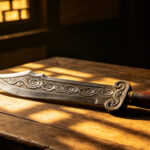
The butterfly sword, or hudiedao, is a type of short, single-edged Chinese blade typically used in pairs. Each sword is roughly the length of a human forearm, making it highly portable and easy to conceal under clothing or inside boots.
In traditional usage, both blades are carried together in a single scabbard, appearing as one weapon until drawn. Once deployed, the practitioner wields a dual sword system, using coordinated movements for attack, defense, trapping, and countering.
In Chinese martial arts terminology, these weapons are sometimes also called:
- Butterfly knives (Wing Chun usage)
- Eight chopping knives (Baat Jaam Do / 八斬刀)
- Chinese double sabers
- Hudiedao dual dao swords
Despite the English name “butterfly knife,” they are not related to modern folding knives.
Origin and Historical Development of Butterfly Swords
The origin of butterfly swords is generally traced to southern China during the late Qing Dynasty (18th–19th century). Early records and surviving examples suggest they were used by:
- Local militias
- River patrol forces
- Martial artists
- Civilian self-defense groups
Unlike long battlefield weapons such as spears or jian swords, butterfly swords were designed for urban combat and close-range encounters. Their compact size made them ideal for concealment and fast drawing in tight environments such as streets, boats, or narrow alleys.
Historical research indicates that hudiedao evolved from earlier short dao designs, gradually becoming more specialized for paired usage and martial arts training.
Why Are They Called “Butterfly Swords”?
The name “butterfly sword” comes from both their shape and movement style.
1. Shape resemblance
When the blades are placed together, the widened guards and curved profiles resemble butterfly wings.
2. Flowing motion in combat
In martial arts practice, the swords move in smooth, circular, and symmetrical patterns. When both blades are used together, their motion resembles a butterfly in flight, especially during spinning, trapping, and redirection techniques.
This combination of aesthetics and functionality helped establish the weapon’s symbolic identity in Chinese martial culture.
Design Features of Chinese Butterfly Swords
Butterfly swords are designed with both practicality and martial efficiency in mind. Key features include:
Short Forearm-Length Blade
The blade length typically matches the user’s forearm, allowing:
- Quick transitions between offense and defense
- Easy concealment
- Strong control in close combat
D-Shaped Guard
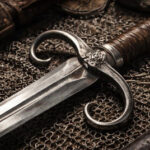
One of the most recognizable elements is the D-shaped hand guard, which:
- Protects the hand from incoming strikes
- Allows blocking and trapping of enemy weapons
- Can be used for hooking or controlling weapons
Single-Edged Blade
Most butterfly swords feature:
- A sharpened cutting edge
- A thick spine for durability
- A strong forward curve for slashing attacks
Paired Weapon System
Unlike most swords, hudiedao are designed to be used in pairs:
- One blade for defense and control
- One blade for attack and counter-striking
Butterfly Swords in Wing Chun and Southern Martial Arts
The most famous association of butterfly swords is with Wing Chun Kung Fu. In Wing Chun training, the weapon is known as Baat Jaam Do (Eight Cutting Knives).
In this system, butterfly swords represent the highest level of weapon training and are considered an extension of empty-hand techniques.
Other martial arts that use butterfly swords include:
- Hung Gar Kung Fu
- Choy Li Fut
- Southern Shaolin systems
- White Crane Kung Fu
Each style adapts the weapon differently, but the core principles remain consistent: close-range control, rapid transitions, and simultaneous offense-defense integration.
Fighting Techniques and Combat Application
Butterfly swords are designed for fast, aggressive, and adaptive combat. Key techniques include:
Trapping and Binding
The D-guard allows practitioners to:
- Hook enemy weapons
- Control long weapons like spears
- Redirect attacks instead of blocking directly
Dual-Wield Coordination
Unlike single-sword systems, hudiedao rely on:
- Alternating strikes
- Simultaneous defense and attack
- Continuous motion flow
Close-Quarters Combat Efficiency
Because of their size, butterfly swords excel in:
- Indoor combat
- Urban environments
- Confined spaces where long weapons are ineffective
Defensive Counterattacks
Many techniques emphasize:
- Immediate counter-strikes after blocking
- Using one blade to defend while the other attacks
Butterfly Sword vs Other Chinese Weapons
Compared to longer Chinese weapons like the guandao or jian sword, butterfly swords are:
- More compact and portable
- Faster in close-range exchanges
- Easier to conceal
- Less suited for long-distance combat
They are often considered a “specialist weapon” rather than a battlefield standard weapon.
Cultural Meaning and Symbolism
Beyond combat use, butterfly swords carry symbolic meaning in Chinese martial culture:
- Duality: representing balance between offense and defense
- Harmony: synchronized movement of two blades
- Adaptability: survival in unpredictable environments
- Martial discipline: mastery of control and precision
In modern times, they are also widely featured in:
- Kung fu films
- Martial arts demonstrations
- Video games and anime-inspired weapon designs
- Collector replicas and training equipment
Butterfly Swords in Modern Martial Arts and Popular Culture
Today, hudiedao are primarily used for:
- Traditional Kung Fu training
- Stage performance and choreography
- Collectible replicas
- Film and TV action choreography
Their visual appeal and dynamic movement have made them especially popular in cinematic martial arts, where dual-wield combat creates dramatic and fast-paced fight scenes.
Conclusion
The butterfly sword (hudiedao) is more than just a weapon—it is a symbol of southern Chinese martial arts heritage. With its compact dual-blade design, distinctive D-guard, and deep connection to Wing Chun and other kung fu systems, it represents both practicality and philosophy in combat.
From its origins in Qing Dynasty militias to its modern role in martial arts culture and global media, the butterfly sword remains one of the most fascinating examples of Chinese dual weapons.
Whether studied for historical interest, martial training, or cultural appreciation, the butterfly sword continues to stand as a powerful icon of Chinese martial arts dual blade history.
https://www.coolkatana.com/