Comparing Traditional Japanese Weapons: Naginata vs. Katana – Which Wins?
When it comes to traditional Japanese weapons, the Naginata and Katana stand out as iconic choices. Each weapon boasts its own unique design, historical importance, and practical use. This article explores the defining characteristics of these two weapons and answers the timeless question: Is the Naginata better than the Katana?
Understanding the Naginata
The Naginata, a pole weapon with a curved blade, originated during the Heian period and was widely used by samurai, ashigaru (foot soldiers), and onna-bugeisha (female warriors). Known for its reach and adaptability, the Naginata proved effective against cavalry and opponents with shorter weapons.
Key Features of the Naginata:
Extended Reach: Measuring between 1.5 to 2 meters, the Naginata provides a tactical advantage by keeping adversaries at a distance.
Versatility in Combat: Capable of cutting, thrusting, sweeping, and hooking, it adapts to a wide range of battle scenarios.
Leverage and Power: The long handle allows for powerful strikes and defensive maneuvers, excelling in both open combat and close quarters.
Understanding the Katana
The Katana is synonymous with the samurai, celebrated for its sharpness and exceptional craftsmanship. With its distinct curved, single-edged blade, the Katana has been a symbol of Japanese culture since the 13th century.
Key Features of the Katana:
Blade Precision: Ranging from 60 to 80 cm, the Katana is ideal for fast, precise strikes and rapid-draw techniques.
Masterful Craftsmanship: Forged through traditional methods, including folding and heat treatment, the blade combines durability with flexibility.
Cultural Significance: Beyond its role as a weapon, the Katana represents honor and the samurai’s identity, embodying the principles of Bushido.
Naginata vs. Katana: A Comparative Analysis
Advantages of the Naginata:
Superior Reach: The long shaft keeps opponents at bay, providing a significant advantage against shorter weapons.
Combat Adaptability: Its multi-functional design makes it effective for both offense and defense, suitable for various battle scenarios.
Strategic in Group Combat: In formations, the Naginata excels in repelling charges and maintaining defensive lines.
Advantages of the Katana:
Speed and Agility: The shorter blade enables quicker attacks and efficient counter-strikes, ideal for one-on-one combat.
Technical Mastery: Samurai training emphasizes precise techniques, maximizing the Katana’s potential in skilled hands.
Symbolic Value: As a cultural artifact, the Katana carries immense historical and spiritual weight, appealing to both warriors and collectors.
Modern Applications
Both weapons continue to thrive in contemporary martial arts and cultural practices, demonstrating their enduring legacy.
Modern Uses of the Naginata:
Martial Arts Competitions: The Naginata is featured prominently in sports and traditional martial arts events.
Self-Defense: Its reach and versatility make it an effective defensive tool.
Modern Uses of the Katana:
Performance Art: The Katana is showcased in martial arts demonstrations, highlighting its elegance and cutting prowess.
Collectibles: Due to its historical and aesthetic value, the Katana remains a prized collectible for enthusiasts.
Featured Weapon: Hand-Forged Japanese 47-Inch Naginata Sword
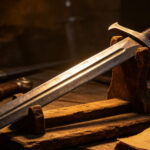
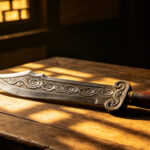
One standout example of the Naginata is the Hand-Forged Japanese 47-Inch Naginata Sword, crafted from 1095 high carbon steel. This masterpiece features the Unokubi-Zukuri blade shape with a traditional clay-tempered hamon line, ensuring sharpness and durability. The handle, wrapped in eel skin and artificial silk, provides a secure grip, while the alloy tsuba adds both beauty and functionality. The scabbard, made of hardwood, complements its exquisite design.
Specifications:
Material: 1095 carbon steel, folded steel, and iron.
Construction: Full tang for added stability during use.
Design: Handcrafted by skilled artisans for optimal balance and wear resistance.
This Naginata is not only battle-ready but also a collector’s dream, combining traditional craftsmanship with modern precision.
Handgeschmiedetes Japanisches 47-Zoll-Naginata-Schwert 1095 Kohlenstoffstahl-Klingenlegierung Tsuba
【shop now】
Hand Forged Japanese 47inch Naginata Sword 1095 High Carbon Steel Blade Alloy Tsuba
Conclusion: Naginata or Katana – Which Reigns Supreme?
The answer to whether the Naginata is better than the Katana depends on context. The Naginata’s reach and adaptability shine in open battlefields and group combat, while the Katana’s speed and precision excel in one-on-one duels. Both weapons require skill and training to master, and their unique attributes cater to different combat styles.
For collectors, martial artists, or history enthusiasts, each weapon represents a piece of Japanese heritage. Whether you choose the versatile Naginata or the elegant Katana, both embody the spirit and tradition of the samurai.
Special Offer: Hand-Forged Japanese Naginata Sword
This Black Friday, seize the chance to own the Hand-Forged Japanese 47-Inch Naginata, made with 1095 high carbon steel and featuring a stunning alloy tsuba. Whether for practice, display, or collection, this weapon is a perfect blend of artistry and functionality. Don’t miss this exclusive deal to add a piece of history to your collection!
Naginata:https://en.wikipedia.org/wiki/Naginata