Did Samurai Really Carry Three Swords? Katana, Wakizashi & Tanto Explained
Did Samurai Really Carry Three Swords?
Katana, Wakizashi, and Tanto Explained
Did Japanese samurai really carry only one sword? Absolutely not.
While pop culture often portrays samurai wielding a single long blade, historical reality tells a far richer story.
Traditionally, a fully equipped samurai mastered three different Japanese swords—the Katana, Wakizashi, and Tanto—each designed for specific combat scenarios, social etiquette, and even ceremonial purposes. Together, these blades formed a complete system of offense, defense, and honor that defined the samurai class.
In this guide, we’ll break down the samurai three-sword system, explain how each weapon was used, and why the legendary Daisho sword set remains highly sought after by collectors today.
Did Samurai Carry Three Swords or Just One?
In movies and anime, samurai are often depicted defeating enemies with dramatic, sweeping cuts from a single katana. While the Katana is undeniably iconic, real samurai rarely relied on only one blade.
During Japan’s feudal periods—especially the Muromachi and Edo eras—samurai faced vastly different environments: open battlefields, narrow corridors, urban streets, and indoor encounters. To adapt, they carried multiple swords of different lengths, each optimized for a specific situation.
A properly trained samurai was expected to understand and wield all three core Japanese sword types.
1. Katana — The Soul of the Samurai
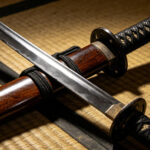
The Katana is the most famous Japanese sword and is often synonymous with Nihonto itself.
Key Specifications
Blade length: Typically over 60 cm (23.6 inches)
Wearing style: Edge-up at the waist (obi), enabling quick-draw techniques like Iaido
Purpose & Combat Role
The katana served as the primary battlefield weapon, excelling in mid- to long-range combat. Its curved blade and balance allowed for devastating slashing power, whether in duels or open warfare.
Cultural Significance
During the Edo period, only samurai were legally permitted to wear a katana in public. More than a weapon, it symbolized:
Social status
Personal honor
Loyalty and authority
It earned the title “the soul of the samurai.”
Collector Insight
For modern enthusiasts searching for a real samurai sword, a full-tang, high-carbon steel katana is often the best entry point. It balances historical authenticity, cutting performance (tameshigiri), and visual impact for display.
2. Wakizashi — The Companion Blade of Honor
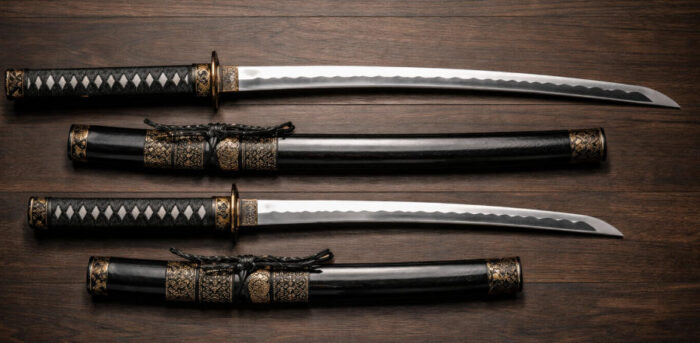
The Wakizashi occupies the middle ground between katana and tanto. When paired with a katana, the two form the famous Daisho (大小)—literally “big and small.”
Key Specifications
Blade length: Approximately 30–60 cm (12–23.6 inches)
Practical Uses
Indoor Combat: In tight interiors such as castles, homes, and hallways, a long katana was impractical. The wakizashi excelled in close-quarters combat.
Backup Weapon: If the katana was lost or damaged, the wakizashi became the samurai’s lifeline.
Always Carried: Samurai were required to leave their katana at the entrance when visiting a home—but the wakizashi stayed at their side.
Symbol of Dignity
Because it was rarely removed, the wakizashi represented a samurai’s constant honor and readiness, even in peaceful settings.
Two-Sword Fighting
The legendary Miyamoto Musashi pioneered Niten Ichi-ryu, wielding a katana and wakizashi simultaneously—proof that these swords were meant to function as a system, not individually.
3. Tanto — The Last Resort Blade
The Tanto is the shortest of the three and resembles a dagger, though it is crafted using the same refined techniques as longer Japanese swords.
Key Specifications
Blade length: Under 30 cm (12 inches)
Tactical & Cultural Roles
Close-Range Combat: Ideal for grappling situations and targeting weak points in armor.
Women’s Self-Defense: Samurai women often carried a Kaiken, a type of tanto, for protection.
Ritual Use: The tanto was historically associated with seppuku (ritual suicide)—a deeply solemn act tied to restoring honor.
Artistic Value
Due to its compact size, tantos often feature exceptional craftsmanship, elaborate fittings (koshirae), and detailed carvings, making them highly prized decorative and collectible swords.
Katana vs. Tachi — A Common Point of Confusion
Many beginners mistake the Katana for the older Tachi, but they differ in both design and function.
Key Differences
Tachi:
Older sword (Heian–Kamakura periods)
Worn edge-down
Designed primarily for mounted combat
Katana:
Became standard in the Muromachi period
Worn edge-up for fast drawing
Optimized for infantry and dueling
Easy Identification Tip
If a Japanese sword is displayed edge-up, it’s likely a katana.
If it’s edge-down, it’s probably a tachi.
Sword Display Etiquette — Left or Right?
For collectors and enthusiasts, proper display of Japanese swords carries symbolic meaning.
Handle Facing Left:
Peaceful display
Indicates trust and non-aggression
Handle Facing Right:
Suggests readiness for combat
Blade Orientation:
Always edge-up
Protects the scabbard and preserves the blade
These rules apply to katana, wakizashi, and tanto alike.
Wakizashi and Kirisute Gomen
The wakizashi also played a role in the Edo-period privilege known as Kirisute Gomen—the legal right of a samurai to strike down a commoner who gravely insulted them.
Because sudden confrontations didn’t always allow time to draw a long sword, the wakizashi became the weapon most often associated with this authority. This further cemented its reputation as the “blade of honor.”
Why Collect the Samurai Daisho Set?
Historically, owning a matched Daisho sword set signified rank, wealth, and legitimacy within the samurai class.
For modern collectors:
A katana alone is impressive
A katana paired with a wakizashi or tanto creates a historically complete and visually powerful display
Matching fittings and styles preserve the spirit of Bushido
Whether you’re interested in Iaido practice, historical study, or museum-quality Japanese sword collecting, understanding the katana, wakizashi, and tanto system is essential to appreciating what real samurai weapons truly represented.