Estoc Sword Guide: Armor Piercing Medieval Thrusting Weapon Explained
What Is an Estoc Sword? A Deadly Armor-Piercing Thrusting Weapon
The estoc sword is one of the most specialized medieval European weapons, designed not for slashing but for pure armor-piercing thrusting combat. Often referred to as a tuck sword or panzerstecher, the estoc was engineered to defeat heavily armored knights during a time when traditional cutting swords became ineffective.
As plate armor evolved across medieval Europe, warriors needed a weapon capable of targeting weak points such as joints, visor gaps, and chainmail seams. The estoc sword emerged as the ultimate solution—an elegant yet lethal example of medieval engineering focused entirely on penetration rather than cutting.
Today, the estoc remains highly popular in medieval sword collections, historical European martial arts (HEMA), and replica armor-piercing sword displays.
Estoc Sword History: Origins in Medieval Europe
The estoc originated between the 14th and 16th centuries during a critical shift in battlefield armor technology. As full plate armor became widespread, traditional arming swords and longswords struggled to deliver effective damage.
To counter this, European blacksmiths developed a new type of weapon:
- A long, rigid thrusting blade
- A design with minimal or no cutting edge
- A structure optimized for maximum piercing force
Historical records show estocs were widely used across France, Germany, Italy, and England. They were especially favored by knights and mounted cavalry, who needed a reliable secondary weapon once the lance was broken in combat.
The estoc’s development reflects a key moment in medieval weapon evolution, marking the transition from cutting-focused swords to precision thrusting weapons.
Estoc Sword Design: Built for Armor Penetration
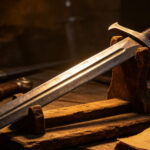
The defining feature of the estoc sword is its specialized anti-armor construction. Every part of the weapon was designed to maximize thrusting efficiency and structural rigidity.
Blade Structure: Long, Stiff, and Edgeless
The estoc blade typically features:
- A long blade (90–130 cm range) for extended reach
- A triangular, square, or diamond cross-section for strength
- A rigid, non-flexing structure to prevent bending on impact
- A sharp, reinforced point for piercing armor gaps
- Little or no cutting edge, prioritizing thrust over slash
This geometry made the estoc extremely effective against chainmail armor, plate gaps, and knightly harness armor.
Hilt and Grip: Control and Power
The estoc’s hilt system was equally important for battlefield performance:
- A long grip designed for one or two hands
- A crossguard or ring guard for hand protection
- A balanced structure for fast thrust recovery
- Strong construction for close combat durability
Many estocs were used in half-swording techniques, where the wielder would grip part of the blade for better control during armored fighting.
How the Estoc Sword Was Used in Combat
The estoc was not a general-purpose sword—it was a highly specialized battlefield tool.
✔ Armor Gap Targeting
The primary combat method involved stabbing into:
- Helmet visor openings
- Underarm joints
- Neck gaps
- Plate armor seams
Even heavily armored knights had vulnerable points, and the estoc was designed specifically to exploit them.
✔ Anti-Knight Battlefield Role
When facing armored cavalry or heavily protected infantry, cutting swords often failed. The estoc became a preferred anti-knight thrusting weapon, capable of delivering lethal force where slashing weapons could not.
✔ Cavalry and Infantry Usage
Estocs were used by both:
- Mounted knights as secondary weapons
- Infantry soldiers in defensive formations
- Guards protecting castles or fortifications
Its long reach made it especially effective in tight battlefield engagements.
Estoc vs Other Medieval Swords
The estoc is often compared with other medieval weapons, but its role is highly specialized.
Weapon TypeDesign FocusPrimary FunctionEstoc SwordLong rigid thrusting bladeArmor-piercing attacksLongswordBalanced cutting + thrustingVersatile combatBroadswordHeavy slashing bladeCrushing and cutting strikesRapierLightweight thrusting swordDuels and civilian defense
Unlike versatile swords, the estoc is a pure armor-piercing thrusting weapon, making it one of the most specialized swords in medieval history.
Combat Advantages of the Estoc Sword
The estoc’s effectiveness comes from several key advantages:
Precision Penetration
Its narrow tip allows precise strikes into armor gaps.
Structural Strength
The rigid blade resists bending during high-impact thrusts.
Extended Reach
Long blade length gives tactical distance advantage.
High Armor Efficiency
Designed specifically for defeating plate armor and chainmail.
These advantages made it a dominant weapon in late medieval armored warfare.
Historical Significance of the Estoc Weapon
The estoc represents a major shift in medieval European combat strategy:
- Shift from slashing to thrust-focused warfare
- Development driven by advances in armor technology
- Influence on later weapons like rapiers and dueling swords
- Increased emphasis on precision and technique over brute force
It reflects the constant arms race between armor protection and weapon innovation in medieval history.
Modern Interest in Estoc Swords
Although no longer used in combat, the estoc sword remains highly relevant today:
🔹 Collectors and Enthusiasts
High-quality estoc replica swords are popular among medieval weapon collectors.
🔹 Historical European Martial Arts (HEMA)
Fighters study estoc techniques to understand armored combat strategies.
🔹 Film and Cosplay
The estoc appears in medieval-themed movies, games, and cosplay events.
🔹 Museum Exhibits
Original estoc swords are displayed in museums as examples of medieval engineering.
Conclusion: The Estoc as the Ultimate Armor-Piercing Sword
The estoc sword stands as one of the most advanced medieval armor-piercing weapons, designed specifically for thrusting into the weakest points of knightly armor. Its rigid structure, long reach, and precision tip made it a fearsome tool on the battlefield.
From medieval Europe to modern collections, the estoc continues to symbolize the evolution of specialized sword design, armored combat tactics, and historical European martial arts.
https://www.coolkatana.com/