Estoc Sword Guide: History, Design & Armor-Piercing Power
Estoc Sword: History, Design, and Armor-Piercing Power Explained
The estoc sword stands out as one of the most specialized weapons in medieval Europe. Engineered specifically for armor-piercing combat, this long thrusting blade became essential during an era when knights wore increasingly advanced plate armor. Its unique structure and battlefield role highlight a major shift in medieval warfare tactics and weapon design.
What Is an Estoc Sword?
An estoc sword is a rigid, straight thrusting weapon designed primarily to penetrate armor rather than cut. Unlike traditional swords, it typically lacks a sharpened edge, focusing entirely on delivering powerful and precise thrusts.
Key features of the estoc sword include:
- A narrow, stiff blade built for thrusting attacks
- A sharply tapered point for penetrating armor gaps
- Minimal or no cutting edges
- A design optimized for accuracy and force concentration
Because of these characteristics, the estoc is widely recognized as a highly effective anti-armor sword.
Origins and History of the Estoc Sword
The estoc sword developed in medieval Europe between the 12th and 14th centuries, during a time when advancements in armor significantly reduced the effectiveness of cutting weapons.
As plate armor became more common, warriors required new solutions. The estoc emerged as a response to this challenge, offering a weapon capable of bypassing armor through thrusting techniques.
Historical context:
- Originated in regions such as France, England, and Central Europe
- Widely used from the 13th to 15th centuries
- Associated with heavily armored knights and professional soldiers
- Used in major conflicts where armor played a dominant role
The estoc reflects the ongoing evolution of weapons in response to defensive technology.
Design and Construction of the Estoc Sword
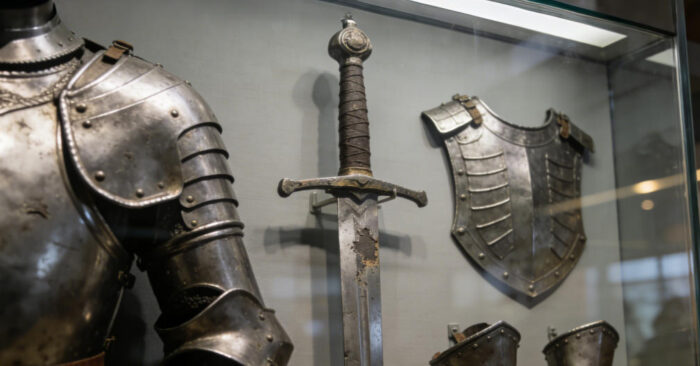
The estoc sword is defined by its highly specialized structure, built for strength, rigidity, and precision.
Blade Design
- Typical length ranges from 90 to 120 cm or longer
- Cross-sections often include triangular, square, or diamond shapes
- Extremely stiff to prevent bending during impact
- Narrow, reinforced tip for penetrating chainmail and armor joints
This design ensures that the force of each strike is focused into a small point, maximizing penetration.
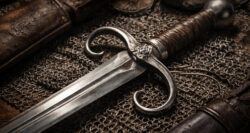
Hilt and Grip
- Extended grip allows for one-handed or two-handed use
- Crossguard protects the hand during close combat
- Balanced construction enhances control and accuracy
The ergonomic design supports precise targeting and controlled thrusting, especially in tight combat situations.
Combat Use of the Estoc Sword
The estoc sword was not a general-purpose weapon. It was specifically developed for fighting armored opponents.
Primary combat applications:
- Targeting armor gaps such as joints, visors, and weak points
- Anti-knight combat, where cutting weapons were ineffective
- Close-range precision attacks using techniques like half-swording
- Defensive thrusting, maintaining distance while counterattacking
Its rigid blade allowed fighters to deliver accurate, high-force thrusts, making it extremely effective against plate armor.
Estoc Sword vs Other Medieval Weapons
The estoc sword differs significantly from other medieval swords due to its specialization.
- Estoc sword – Designed for thrusting and armor penetration
- Longsword – Versatile weapon for both cutting and thrusting
- Broadsword – Heavy blade focused on slashing attacks
- Falchion – Curved sword optimized for cutting
While other swords offered flexibility, the estoc excelled in a specific role: defeating armored enemies.
Historical Importance of the Estoc Sword
The estoc sword represents a key development in medieval warfare:
- Shift toward precision thrusting techniques
- Rise of specialized anti-armor weapons
- Adaptation to advancements in plate armor
- Influence on later thrusting weapons in Europe
It illustrates how military technology evolves in response to changing battlefield conditions.
Modern Appeal of the Estoc Sword
Today, the estoc sword remains popular among enthusiasts and collectors:
- Featured in historical collections and museums
- Used in medieval reenactments and HEMA training
- Valued as a decorative replica weapon
- Appears in films, games, and historical media
Its distinctive design and historical significance make it a standout piece in the world of medieval swords and armor-piercing weapons.
Conclusion
The estoc sword is a remarkable example of innovation driven by necessity. Built to overcome the challenges of armored combat, it combines strength, precision, and purpose in a single weapon.
As armor evolved, so did the weapons designed to defeat it—and the estoc remains one of the most effective solutions ever created, symbolizing the ingenuity of medieval warfare.
https://www.coolkatana.com/