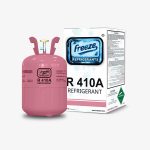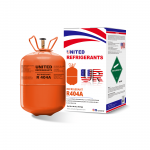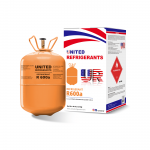
Freezing Gas: Unleashing the Power of Refrigerants
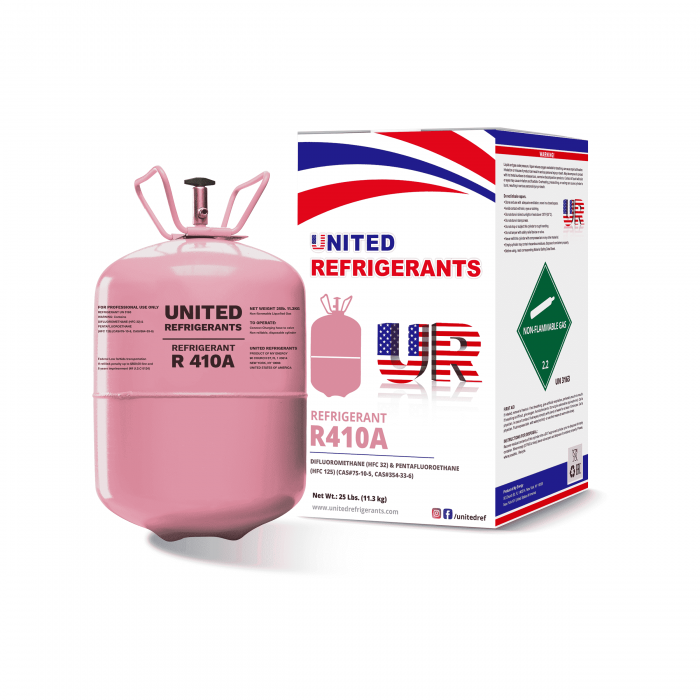
Refrigerants play a crucial role in the cooling and refrigeration industry, enabling the transfer of heat from one place to another. With the advancement of technology, the use of refrigerants has become more efficient and environmentally friendly.
Freezing gas, also known as refrigerant, is a substance that undergoes phase changes from a gas to a liquid and back to a gas to transfer heat. It works based on the principles of thermodynamics and the refrigeration cycle.
The process starts with the refrigerant in a low-pressure gaseous state entering the compressor. The compressor increases the pressure and temperature of the gas, causing it to transform into a high-pressure gas. This high-pressure gas then flows into the condenser, where it releases heat to the surrounding environment and condenses into a liquid.
The liquid refrigerant then passes through an expansion valve, which reduces its pressure, causing it to evaporate and turn back into a gas. During this evaporation process, the refrigerant absorbs heat from its surroundings, providing cooling effects. The low-pressure gas returns to the compressor, and the cycle repeats.
The choice of refrigerant is essential for both performance and environmental considerations. In the past, chlorofluorocarbons (CFCs) were commonly used as refrigerants, but they were found to contribute to ozone depletion. As a result, regulations such as the Montreal Protocol were implemented to phase out the use of CFCs.
Today, hydrofluorocarbons (HFCs) are widely used as replacements for CFCs. While HFCs do not deplete the ozone layer, they have a high global warming potential (GWP). This has led to the search for alternative refrigerants with lower environmental impact.
One promising alternative is hydrofluoroolefins (HFOs), which have lower GWPs compared to HFCs. HFOs offer similar performance and energy efficiency while reducing the environmental impact. Another alternative is natural refrigerants such as carbon dioxide (CO2), ammonia (NH3), and hydrocarbons (HCs). These natural refrigerants have zero ozone depletion potential (ODP) and significantly lower GWPs.