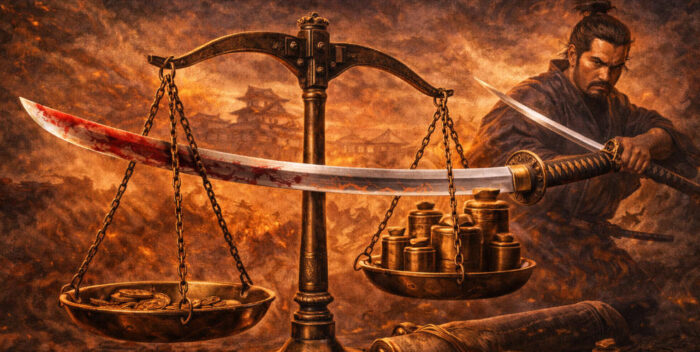
How Heavy Is a Katana? Weight, Balance, and Performance Explained
How Heavy Is a Katana? Ultimate Guide to Katana Weight, Balance & Performance
When people think of a katana, they often imagine a massive, unwieldy samurai sword from movies or video games. In reality, the weight of a katana and how that weight is distributed play a far greater role in performance than sheer mass. Understanding katana weight, balance point, blade design, and handling characteristics is essential whether you’re a collector, martial artist, or sword enthusiast.
In this comprehensive guide, you’ll discover typical weight ranges for Japanese swords, how balance affects cutting and control, and why weight distribution matters more than total pounds or kilograms.
Typical Katana Weight: What You Should Expect
A traditional samurai katana generally falls within a specific weight range:
Standard katana weight: ~1.1 to 1.4 kg (about 2.4-3.1 lbs) including blade and fittings.
Many historically accurate swords sit near 1.2–1.3 kg as a performance sweet spot for speed and power.
This relatively light weight compared with imagined “heavy swords” allows for fast draws, fluid cuts, and extended practice without fatigue — a hallmark of true katana craftsmanship.
Why Katana Weight Varies
Several key design factors influence how heavy a katana feels and performs:
1. Blade Geometry and Length
Blade length and thickness directly affect mass — longer or thicker blades weigh more.
The curvature (sori) and cross-section shape influence how that mass feels in motion, not just how heavy it is on a scale.
2. Balance Point (Center of Gravity)
The sword balance point — typically measured from the guard — determines handling:
A balance point closer to the hand offers speed and nimbleness.
A point slightly forward adds cutting momentum and power.
Ideal balance for many performance swords is around 5-7 inches (12-18 cm) from the tsuba (guard), enabling both fast kata work and forceful cutting.
3. Blade Features (Bo-hi and Distal Taper)
Bo-hi (fullers) remove metal to reduce weight while preserving strength, shifting balance rearward.
A good distal taper — thick at the base, thinner toward the tip — improves balance and cutting efficiency.
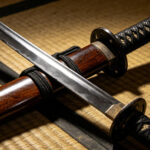
4. Fittings and Mountings (Koshirae)
The handle wrap, guard, end cap, and ornaments all influence total weight and how that weight feels in your grip. Different materials and designs can subtly shift the balance point and overall performance.
Balance vs. Weight: What Matters Most
It’s common for beginners to fixate on how many pounds or kilograms a sword weighs. Yet:
Balance matters more than absolute weight. A well-balanced 1.3 kg katana can feel lighter and more agile than an unevenly weighted 1.1 kg blade.
Weight distribution affects fatigue, control, and cutting effectiveness more than the number on the scale.
Good swordsmiths tune the entire geometry — from blade to fittings — to create optimized weight distribution for the intended use, whether that’s iaido (fast draw practice) or tameshigiri (test cutting).
Weight and Performance: Practical Applications
Light Katana (Faster, Agile)
Typically on the lower end of the weight range.
Ideal for iaido, forms practice, and precision cutting.
Easier on wrists and shoulders over extended training sessions.
Standard/Moderate Weight
Strikes a balance between speed and cutting power.
Preferred by many martial artists for general sword work.
Heavier Blades (Power Focused)
Slightly higher mass increases momentum and cutting force.
Often used for thick target cutting or battlefield-inspired training.
Less nimble but more impactful when striking.
Remember: a too-heavy sword can lead to fatigue and poor technique, while a blade that’s too light may lack cutting effectiveness.
Comparing Katana With Other Japanese Swords
Sword Type Typical Weight Primary Use
Katana ~1.1-1.4 kg (2.4-3.1 lbs) Balance of speed & power
Wakizashi ~0.7-1.0 kg Close combat, backup
Iaito (Practice) ~1.0-1.2 kg Safe training
Ōdachi/Nodachi ~1.8-2.5+ kg Battlefield, long reach
This comparison shows why the katana weight range is so optimized — it’s designed for versatile performance across multiple sword disciplines.
Final Thoughts: Choosing Your Ideal Katana
When evaluating a katana, consider both weight and balance distribution:
✔ Look for a sword with a balance point that feels natural in your grip.
✔ Choose weight that supports your training goals — lighter for speed, moderate for versatility, heavier for power.
✔ Remember that weight distribution and balance point often matter more than total weight on a scale.
Whether you’re selecting your first functional katana or refining your collection, understanding how weight influences performance and handling will help you make a smarter choice that matches your skill level and training style.
Hand Forged Japanese Wakizashi Sword Damascus Folded Steel Full Tang Sharp
Hand Forged Japanese Wakizashi Sword Damascus Folded Steel Full Tang Sharp