Kusanagi Sword: History, Mythology & Japan’s Sacred Blade
Kusanagi Sword: The Legendary Sacred Blade of Japanese MythologyWhat Is the Kusanagi Sword and Why Is It So Famous?
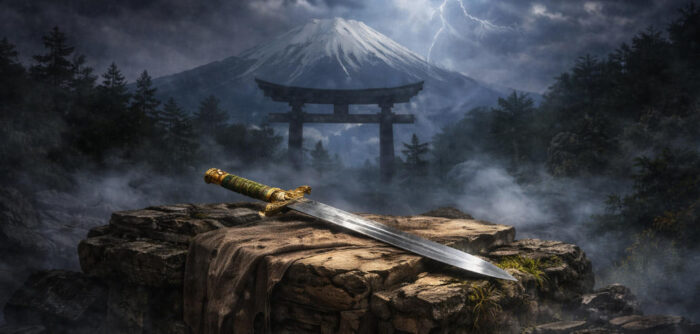
Among all legendary Japanese swords, few possess the mystique, cultural importance, and mythical power of the Kusanagi Sword. Known in Japanese as Kusanagi-no-Tsurugi, this sacred weapon occupies a unique place in Japanese mythology, imperial history, and Shinto tradition.
Unlike ordinary swords associated with samurai warriors, the Kusanagi sword is considered a divine artifact. It is one of Japan’s Three Sacred Treasures, serving as a symbol of imperial legitimacy and national identity for centuries.
Today, the Kusanagi remains one of the world’s most mysterious legendary weapons. Its true appearance is unknown, it is rarely displayed, and countless stories surround its origins and powers.
The Meaning of Kusanagi-no-Tsurugi
The name Kusanagi-no-Tsurugi translates to “Grass-Cutting Sword” or “Grass-Mowing Sword.”
Before receiving this famous name, the blade was known as:
Ame-no-Murakumo-no-Tsurugi(Sword of the Gathering Clouds of Heaven)
This earlier name emphasized the sword’s divine origin and connection to the gods.
The title “Kusanagi” emerged later through one of Japan’s most celebrated heroic legends, transforming the weapon from a sacred relic into a symbol of courage, wisdom, and survival.
The Mythological Origin of the Kusanagi SwordThe Battle Against Yamata no Orochi
According to ancient Japanese mythology recorded in the Kojiki and Nihon Shoki, the storm god Susanoo-no-Mikoto descended from heaven and encountered a grieving family.
The couple’s daughters had been devoured one by one by the monstrous Yamata no Orochi, an enormous eight-headed and eight-tailed dragon-like serpent.
To save their remaining daughter, Susanoo devised a clever strategy. He prepared strong rice wine and placed it before each of the creature’s heads. Once the beast became intoxicated, Susanoo attacked and slew the monster.
While cutting through one of Orochi’s tails, he discovered a magnificent sword hidden inside.
Recognizing its extraordinary nature, Susanoo presented the blade to his sister, Amaterasu, the Sun Goddess.
This act transformed the weapon into a sacred treasure of the heavenly realm and marked the beginning of its legendary status.
How the Sword Became the “Grass-Cutting Sword”
Generations later, the sword was entrusted to the legendary prince and warrior Yamato Takeru.
During a military campaign, enemies lured him into a vast field and set the surrounding grasslands ablaze. Trapped by the rapidly spreading fire, Yamato Takeru seemed destined to perish.
Drawing the sacred sword, he cut through the tall grass around him and used the wind generated by the blade to redirect the flames toward his attackers.
The miraculous escape earned the sword its new name:
Kusanagi-no-Tsurugi — the Grass-Cutting Sword.
This story transformed the blade into a powerful symbol of:
- Wisdom over brute force
- Courage in the face of danger
- Mastery of nature
- Divine protection
- Heroic destiny
The legend remains one of the most famous tales in Japanese folklore and sword mythology.
Kusanagi and Japan’s Three Sacred Treasures
The Kusanagi sword is not merely a mythological weapon. It forms part of Japan’s Three Imperial Regalia, collectively known as the Sanshu no Jingi.
These sacred treasures include:
⚔️ Kusanagi-no-Tsurugi
Represents valor, courage, and martial authority.
🪞 Yata no Kagami
The sacred mirror symbolizing wisdom, honesty, and truth.
💎 Yasakani no Magatama
The sacred jewel representing benevolence, harmony, and legitimacy.
Together, these treasures serve as symbols of the divine right of the Japanese emperor.
For centuries, possession of these artifacts has been closely connected to imperial succession and state ceremonies.
The Role of Kusanagi in Japanese Imperial History
The Kusanagi sword occupies a central place in Japan’s imperial tradition.
During imperial enthronement ceremonies, the sacred treasures are transferred as symbols of authority. Although the sword itself is rarely seen, its presence carries immense ceremonial importance.
Historically, rulers, warriors, and religious leaders viewed the sword as a tangible link between the human world and the divine realm.
Unlike ordinary historical weapons, Kusanagi’s significance lies not in battlefield victories but in its role as a symbol of national continuity and sacred authority.
This unique status has made it one of the most revered objects in Japanese history.
Is the Kusanagi Sword a Katana?
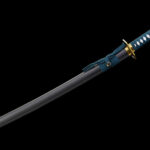
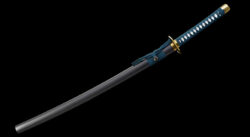
One common misconception is that the Kusanagi sword resembles a modern katana.
In reality, historians and weapon researchers generally believe the original Kusanagi was likely a tsurugi, an ancient Japanese straight sword.
Characteristics may have included:
- Double-edged blade
- Straight profile
- Central ridge for strength
- Length between 70–90 centimeters
- Ritual and ceremonial significance
These features differ significantly from the curved katana that became associated with the samurai centuries later.
As a result, the Kusanagi is often classified among ancient Japanese weapons rather than traditional samurai swords.
The Mystery Surrounding the Sword’s Appearance
One reason the Kusanagi sword continues to fascinate historians and enthusiasts is that almost nobody has seen it.
The blade is traditionally believed to be enshrined within sacred Shinto sites and kept hidden from public view.
Because of this secrecy:
- No verified photographs exist
- No detailed measurements are publicly available
- Scholars rely heavily on historical records and mythology
- Multiple theories about its design persist
Its hidden nature only strengthens its reputation as one of history’s most mysterious sacred weapons.
The uncertainty surrounding its appearance allows each generation to reinterpret and imagine the legendary sword in new ways.
Kusanagi Sword in Popular Culture
The influence of Kusanagi-no-Tsurugi extends far beyond ancient mythology.
The sword has inspired countless appearances in:
- Anime
- Manga
- Video games
- Fantasy literature
- Japanese cinema
- Popular culture worldwide
Series such as Naruto, Bleach, Fate, and numerous RPG games reference or reinterpret the legendary blade.
These modern adaptations continue introducing new audiences to one of Japan’s most famous mythological swords.
Why the Kusanagi Sword Still Matters Today
The Kusanagi sword represents far more than an ancient weapon.
It embodies:
- Japanese mythology
- Shinto beliefs
- Imperial tradition
- Heroic legend
- Cultural identity
- Spiritual authority
Few artifacts have maintained such relevance for over a thousand years.
Whether viewed as a sacred relic, a mythological treasure, or a legendary Japanese sword, Kusanagi-no-Tsurugi remains one of the most fascinating symbols in world history.
Its story connects gods, heroes, emperors, and modern audiences through a timeless narrative of courage, destiny, and divine power.
Conclusion
The Kusanagi Sword, also known as Kusanagi-no-Tsurugi or the Grass-Cutting Sword, stands among the most legendary weapons ever recorded in mythology. From its discovery within the body of Yamata no Orochi to its role as one of Japan’s Three Sacred Treasures, the sword has become an enduring symbol of power, legitimacy, and cultural heritage.
More than a weapon, Kusanagi represents the intersection of myth, history, religion, and national identity. Its mysteries remain unsolved, yet its influence continues to inspire historians, collectors, sword enthusiasts, and fans of Japanese culture around the world.
https://www.coolkatana.com/