Medieval Knight Sword Guide: History, Combat & Knight Weapons
Medieval Knight Sword: History, Combat Uses, and the Legacy of Knights’ WeaponsWhat Is a Medieval Knight Sword and Why Was It So Important?
In the world of medieval warfare, few weapons are as legendary as the medieval knight sword. Whether carried into brutal battlefield combat or used during ceremonial knighting rituals, the knights sword became one of the most recognizable symbols of honor, courage, and noble status throughout Europe.
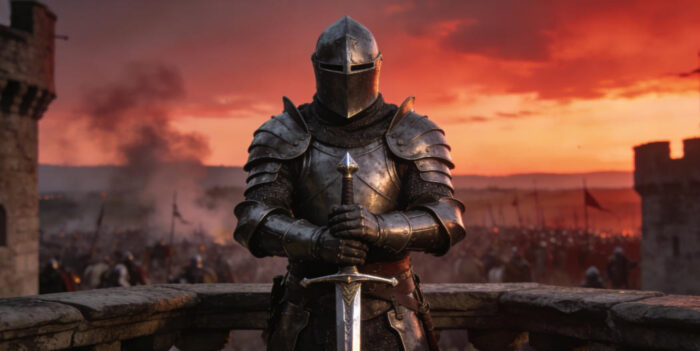
More than just a weapon, the knight sword represented the identity of the medieval warrior. From mounted cavalry charges to one-on-one duels, these iconic knight weapons shaped the outcome of countless battles and helped define the image of the medieval knight that still dominates popular culture today.
This guide explores the origins, design, battlefield applications, craftsmanship, and cultural meaning of the medieval knight sword while examining why swords remained central to knightly tradition for centuries.
What Is a Knight Sword?
A knight sword generally refers to the straight-bladed swords used by European knights during the Middle Ages. Depending on the historical period, these weapons included arming swords, longswords, and hand-and-a-half swords designed for both mounted and foot combat.
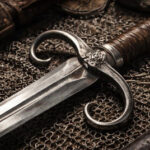
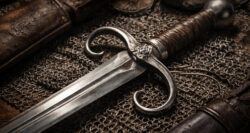
Most medieval knight swords featured:
- A double-edged steel blade
- A crossguard for hand protection
- A leather-wrapped grip
- A weighted pommel for balance
Unlike many other medieval weapons, the knights sword balanced cutting ability, thrusting precision, speed, and versatility. This adaptability made it one of the most effective battlefield tools for heavily armored warriors.
The sword also carried enormous symbolic meaning. During knighting ceremonies, the knighting sword represented loyalty, honor, military service, and religious duty. Many swords were blessed before battle and treated almost as sacred objects by their owners.
Origins of the Medieval Knight Sword
The origins of the medieval knight sword trace back to early European military traditions around the 9th and 10th centuries. As feudal societies developed and mounted cavalry became increasingly important, knights required weapons capable of fighting both infantry and rival horsemen.
Early knight swords evolved from Viking-age blades and Carolingian weapons. These swords were relatively broad, optimized for slashing attacks against lightly armored opponents. Over time, advances in armor forced swordsmiths to redesign blades for improved thrusting capability and armor penetration.
As warfare evolved, so did the knight sword.
Early Medieval Knight Swords (10th–12th Century)
During the early Middle Ages, knights primarily fought as cavalry. Their swords emphasized cutting power and durability.
Characteristics of early knight swords included:
- Wide blades
- Shorter grips
- Broad cutting edges
- Fuller grooves for weight reduction
These swords worked effectively against unarmored or lightly armored enemies. Combined with the speed of a charging horse, they could deliver devastating slashing attacks capable of breaking enemy formations.
At this stage, the sword was usually paired with a shield, making one-handed operation essential.
High Medieval Knight Swords (13th–14th Century)
As chainmail and partial plate armor became common, the medieval knight sword underwent major changes.
Swordsmiths created longer blades with sharper points optimized for thrusting into armor gaps. The balance of the weapon improved, allowing knights to transition smoothly between cutting and stabbing attacks.
This period saw the rise of the classic longsword, one of the most famous knights weapons in European history.
Key developments included:
- Longer reach
- More tapered blade designs
- Reinforced crossguards
- Improved steel tempering techniques
- Hand-and-a-half grips for two-handed control
Knights trained extensively in swordsmanship during this era. Manuals from medieval fencing schools demonstrate advanced techniques involving parries, thrusts, grappling, and half-swording.
Late Medieval Knight Swords (15th Century and Beyond)
By the late Middle Ages, full plate armor dominated European battlefields. Traditional cutting attacks became less effective, encouraging further specialization in knight weapons.
Some swords evolved into thrust-oriented weapons such as the estoc sword, specifically designed to pierce armor gaps. Other swords became lighter and more ceremonial as firearms gradually changed warfare forever.
Late medieval knight swords often featured:
- Narrow thrusting blades
- Complex hilts
- Decorative engravings
- Enhanced balance
- Ceremonial designs for nobility
Even as battlefield tactics evolved, the knight sword retained enormous symbolic importance in European culture.
Structure and Design of a Medieval Knight Sword
A traditional knights sword consisted of several carefully engineered parts, each serving a specific combat purpose.
Blade
The blade was forged from high-carbon steel to provide durability, flexibility, and sharpness. Medieval swordsmiths repeatedly heated, hammered, folded, and tempered steel to achieve the ideal balance between hardness and resilience.
Some blades emphasized cutting, while others prioritized thrusting against armored opponents.
Crossguard
The crossguard protected the wielder’s hand from enemy strikes and prevented opposing blades from sliding downward during combat.
Its cruciform shape also carried strong Christian symbolism for medieval knights.
Grip
The grip was usually made from wood wrapped in leather or cord. Proper grip design improved weapon control during extended combat.
Pommel
The pommel balanced the sword and sometimes served as a blunt striking weapon during close-quarters combat.
How Knights Used Swords in Battle
The medieval knight sword excelled because of its tactical flexibility. Unlike specialized weapons such as maces or polearms, swords adapted to many combat situations.
Mounted Combat
During cavalry charges, knights combined the speed of their horses with the momentum of their swords to deliver devastating attacks.
A mounted knight could slash downward at infantry or thrust at enemy riders while maintaining mobility.
Close-Quarters Fighting
In crowded melees or castle sieges, swords became highly practical weapons. Their compact versatility allowed knights to fight effectively in confined spaces where long spears or lances became difficult to maneuver.
Fighting Armored Opponents
Against armored enemies, knights targeted weak points such as:
- Visors
- Armpits
- Neck joints
- Elbows
- Groin gaps
Techniques like half-swording allowed knights to grip part of the blade for greater thrusting precision against plate armor.
Defensive Use
The knight sword also functioned defensively. Skilled warriors used the blade to parry incoming attacks from axes, maces, or other swords while quickly counterattacking.
Why Knights Loved Their Swords
Although spears, lances, maces, and polearms were often more effective in certain battlefield situations, knights still deeply valued swords. Historical discussions frequently note that swords served both practical and symbolic purposes.
Several reasons explain the sword’s legendary status:
Symbol of Honor
The sword represented knighthood itself. A knight’s sword symbolized personal honor, noble duty, and social status.
Versatility
Unlike many specialized weapons, the knights sword remained effective in many combat environments.
Personal Weapon
The sword was closely tied to individual skill and identity. Knights trained for years to master swordsmanship.
Ceremonial Importance
The knighting ceremony itself often involved touching the candidate with a ceremonial knighting sword, permanently linking swords with noble identity.
Artistic Craftsmanship
Many medieval swords were masterpieces of metallurgy and decoration, featuring engraved blades, jeweled hilts, and family heraldry.
Were Swords Really the Main Weapon of Knights?
Popular culture often portrays swords as the primary battlefield weapon of medieval knights. In reality, knights used many different weapons depending on the situation.
Historical experts and battlefield evidence suggest that lances, spears, poleaxes, and maces frequently played larger roles in large-scale warfare.
However, the sword remained essential because it served as:
- A reliable sidearm
- A dueling weapon
- A symbol of status
- A versatile backup weapon
- A personal badge of knighthood
This combination of practicality and symbolism explains why the medieval knight sword became immortalized in legends, literature, films, and fantasy culture.
Knight Sword vs Other Medieval Knight Weapons
Knights used a wide variety of medieval weapons besides swords.
Lance
The primary cavalry weapon during mounted charges.
Mace
Designed to crush armor through blunt force trauma.
War Hammer
Specialized anti-armor weapon effective against plate armor.
Poleaxe
One of the deadliest close-combat knight weapons during the late Middle Ages.
Dagger
Used in grappling situations and for finishing incapacitated enemies.
Despite these alternatives, the knight sword remained the most iconic weapon because it combined battlefield effectiveness with cultural prestige.
The Cultural Legacy of the Knight Sword
The medieval knight sword continues to inspire modern audiences through films, literature, video games, and historical reenactments.
Legendary swords such as Excalibur helped transform the knight sword into a universal symbol of heroism, justice, and honor.
Today, collectors, martial artists, historians, and weapon enthusiasts continue studying medieval knight weapons to better understand European warfare and craftsmanship.
Modern interest in longswords, historical European martial arts (HEMA), and medieval reenactment communities has also revived appreciation for authentic knight sword techniques and construction methods.
Conclusion
The medieval knight sword was far more than a simple battlefield weapon. It represented courage, loyalty, skill, and noble identity throughout the Middle Ages.
From brutal cavalry charges to ceremonial knighting traditions, the knights sword became one of the most enduring symbols of medieval Europe. Its balance of combat practicality, craftsmanship, and cultural meaning ensured its legendary status across generations.
Whether studied as a historical artifact, collected as a replica weapon, or admired as a symbol of chivalry, the knight sword remains one of the greatest icons in the history of warfare.
Hand Forged European Sword Spear Sword Folded Steel Red Leather Scabbard