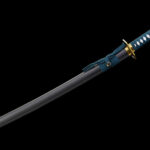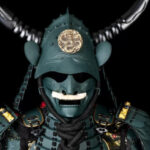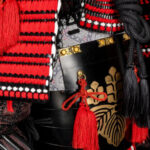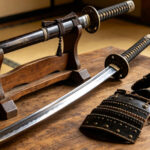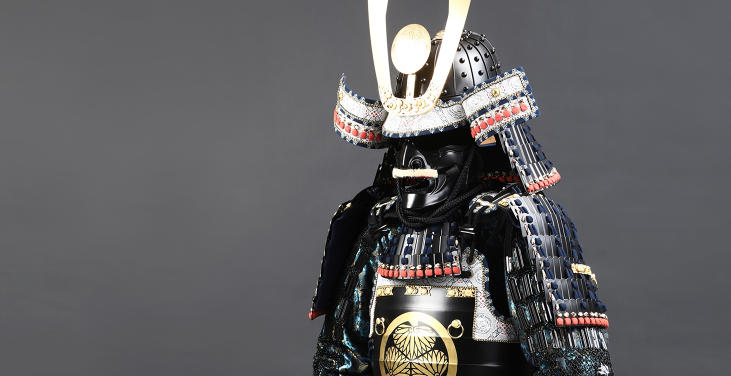
Tokugawa Black & Blue Samurai Armor — a collectible life-size Japanese Yoroi.
Why Is the Tokugawa Clan Black & Blue Samurai Armor a Must-Have for Collectors and History Enthusiasts?
For collectors of Japanese samurai armor, fans of Bushido, and admirers of authentic samurai outfits and historic craftsmanship, a handmade full-size Tokugawa Clan black-and-blue Samurai Armor (complete with an iconic Kuro Kuwagata Kabuto samurai helmet) is more than décor—it’s a living connection to Japan’s most powerful shogunate.
Modeled after the Yoroi armor of the Tokugawa Shogunate, this set perfectly reproduces the dignity, authority, and refined aesthetics of Edo-period samurai.
This article will explore its historical background, symbolism, craftsmanship, cultural meaning, and modern collectible value.
The Historical Legacy of the Tokugawa Clan: From War-Torn Japan to 260 Years of Peace
During the violent and chaotic Sengoku era, Japan’s territories were divided and constantly at war.
From this turmoil emerged the Tokugawa Clan—combining strategic intelligence, political patience, and unmatched leadership to unify Japan.
Tokugawa Ieyasu: The Strategist Behind Unification
Tokugawa Ieyasu, trained in strict samurai disciplines from childhood, mastered tactics, archery, horsemanship, and swordsmanship.
These skills became essential as he rose from regional lord to the most influential figure of his era.
The Battle of Sekigahara: The Turning Point That Shaped Japanese History
In 1600, the decisive Battle of Sekigahara determined Japan’s fate.
Ieyasu’s Eastern Army outmaneuvered the Western Army through superior strategy, discipline, and loyal retainers.
This victory cemented the Tokugawa Clan as Japan’s ruling power.
On the battlefield, commanders wearing black-and-blue armor adorned with the Mitsuba Aoi crest showcased the Tokugawa Clan’s authority, loyalty, and iron determination—a striking image still admired today.
The Edo Shogunate: 260 Years of Stability and Cultural Flourishing
After Ieyasu became Shogun in 1603, he established the Edo Shogunate, initiating over two centuries of peace.
Although warfare faded, the samurai class retained ceremonial roles, and their samurai armor (Yoroi) evolved into symbols of rank, discipline, and cultural identity.
High-ranking Tokugawa retainers continued to wear black-and-blue ceremonial armor during:
Court events
Castle processions
Religious festivals
Daimyo visits
The armor represented more than military equipment—it embodied loyalty, hierarchy, and the Tokugawa code of order.
Bushido Spirit & Family Honor Embodied in Armor
The Tokugawa Clan upheld the principle of “governing through calm authority.”
This philosophy is deeply reflected in the black-and-blue Yoroi armor:
Black lacquer (Kuro-Urushi): authority, discipline, stability
Blue lacing (Odoshi): nobility, loyalty, courage
The iconic Kuro Kuwagata Kabuto helmet, with its imposing horn-like ornament, symbolized power and vigilance—an unmistakable signature of Tokugawa samurai.
Cultural Transmission and Collectible Value in the Modern Era
Today, Tokugawa Clan samurai armor is highly coveted among:
Samurai culture collectors
Japanese history enthusiasts
Museums and cultural institutions
Film and TV productions
Historical reenactment groups
Fans of authentic samurai costumes and samurai outfits
Handmade, full-size Japanese Yoroi armor preserves traditional craftsmanship and symbolizes the enduring legacy of samurai culture.
Owning such armor allows collectors to experience the dignity and spirit of the Tokugawa Shogunate firsthand.
Where Did the Tokugawa Clan Originate?
The Tokugawa family’s origins trace back to Mikawa Province (modern eastern Aichi Prefecture).
With Ieyasu’s rise to power, the clan’s political center shifted to Edo (Tokyo), establishing the strongest military government in Japanese history.
The Evolution of Japanese Samurai Armor (Yoroi)
A central symbol of Japanese martial culture, Yoroi armor evolved across centuries.
Heian Period (794–1185): The First Samurai Armor
Mounted samurai used large, protective armors crafted from iron, leather, and silk.
These early Yorois symbolized both military strength and aristocratic status.
Kamakura to Muromachi Period: Flexibility Meets Functionality
As warfare intensified, armor became lighter and more practical.
Dō-Maru and Haramaki styles emerged—ideal for foot soldiers and close combat.
Sengoku Period: Innovation, Identity, and Prestige
The Sengoku era saw rapid advances in armor technology:
Stronger plating
Multi-layer structures
Family colors and crests for identification
Iconic hues like black, blue, and silver
The Tokugawa Clan’s black-and-blue palette quickly became a visual emblem of authority.
Edo Period: From Battlefield Gear to Symbols of Honor
Under Tokugawa rule, armor took on new roles—ceremonial, symbolic, and cultural.
The Mitsuba Aoi mon and Kuro Kuwagata Kabuto became instantly recognizable as symbols of power and honor.
Historical & Symbolic Meaning of Tokugawa Black & Blue Armor
1. Symbol of Authority and Order
Black symbolizes discipline and restraint; blue symbolizes loyalty and calm strength.
Together, they express Tokugawa ideals of stability and controlled governance.
2. Mitsuba Aoi Family Crest
A sacred emblem reserved only for Tokugawa Shoguns and direct retainers—representing legitimacy, loyalty, and prestige.
3. Ceremonial Significance
The armor was worn for:
Daimyo visits
Ceremonial processions
Castle events
Religious festivals
It embodied the dignity and order of the Edo ruling class.
**Handmade Tokugawa Clan Black & Blue Samurai Armor
with Kuro Kuwagata Kabuto Helmet (Life-Size Japanese Yoroi)**
SHOP NOW
Craftsmanship & Handmade Excellence
A premium life-size samurai armor replica must preserve every authentic detail:
✔ Urushi Lacquer Coating
Multiple layers create a deep shine, resisting corrosion and adding noble elegance.
✔ Metal Plates & Leather Construction
Provides protection, flexibility, and a realistic full-weight feel.
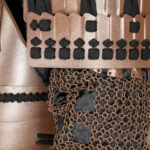
✔ Silk Odoshi Cord Lacing
Blue cords indicate noble rank and Tokugawa affiliation.
✔ Kuro Kuwagata Kabuto Samurai Helmet
The black horned crest symbolizing vigilance, strength, and samurai honor.
This suit can be worn for photoshoots or displayed as a museum-grade collectible.
Cultural and Collectible Value
1. Historical Immersion
Displaying this armor allows collectors to connect physically with Tokugawa power, Bushido ethics, and Edo-era samurai society.
2. Artistic Investment
Handmade Yoroi armors are produced in limited quantities.
With authentic lacquer, iron craftsmanship, and historical accuracy, they hold long-term collectible and investment value.
3. Interior Display
Perfect for libraries, studios, museums, and luxury homes.
The black-and-blue finish elevates the atmosphere with aristocratic Japanese elegance.
4. Modern Applications
Historical reenactment armor
Samurai cosplay
Movie & TV props
Cultural exhibitions
Collectors of samurai clothing, samurai masks, and kabuto helmets
Conclusion
The handmade Tokugawa Clan black-and-blue Samurai Armor with its Kuro Kuwagata Kabuto samurai helmet is not simply a replica—it’s a symbol of Japan’s most influential era.
It embodies:
The authority of the Tokugawa Shogunate
The loyalty and discipline of Bushido
The beauty of traditional Japanese craftsmanship
Whether for collecting, display, reenactment, or film production, this armor brings the prestige and spirit of the samurai into the modern world.
Start your collection now and bring the power of the Tokugawa Shogunate to life!