Venous Leak (Veno-Occlusive Dysfunction)
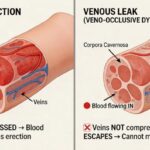
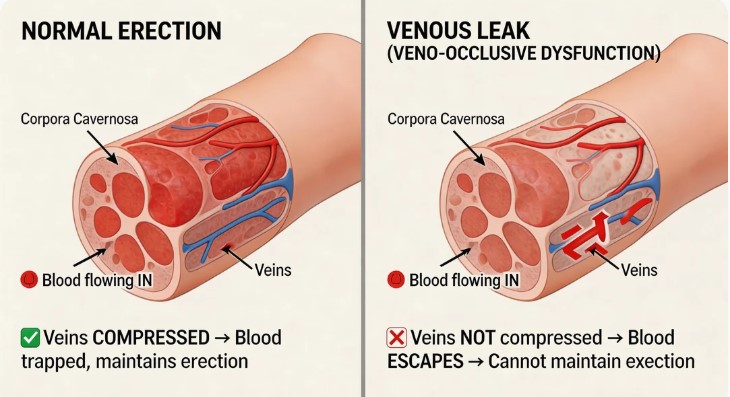
Venous Leak (Veno-Occlusive Dysfunction) is a type of erectile dysfunction (ED) where blood flows into the penis normally during an erection, but the veins fail to trap that blood effectively. As a result, blood escapes too quickly, making it difficult to maintain a firm erection.
Common Symptoms
- Difficulty maintaining an erection during sexual activity
- Erections that soften quickly after penetration
- Partial erections that are not firm enough for intercourse
- Better erections during sleep or upon waking in some cases
Causes
Venous leak may be associated with:
- Age-related changes in penile tissue
- Diabetes
- High blood pressure
- Smoking
- Pelvic injury or surgery
- Connective tissue disorders affecting penile structure
- Sometimes no identifiable cause is found
Diagnosis
A urologist may evaluate for venous leak using:
- Medical history and physical examination
- Blood tests (hormones, blood sugar, cholesterol, etc.)
- Penile Doppler ultrasound after an erection-inducing injection
- Specialized vascular studies in selected cases
Treatment Options
- Oral ED medications such as Sildenafil and Tadalafil
- Vacuum erection devices
- Intracavernosal injection therapy
- Lifestyle improvements (exercise, weight management, smoking cessation)
- Penile implant surgery for severe, treatment-resistant cases
Can It Be Cured?
A true venous leak is often difficult to permanently reverse. Treatment usually focuses on improving erectile function rather than curing the underlying leak. Penile implants generally provide the most reliable long-term solution when other treatments fail.
When to See a Doctor
If you consistently lose erections during sexual activity despite adequate arousal, consult a urologist specializing in men’s sexual health. Proper testing is important because many cases thought to be venous leak are actually caused by other forms of erectile dysfunction.