Xiphos Sword: Ancient Greek Weapon, History, Design & Battle Uses
Xiphos Sword: Ancient Greek Swords, Design, History, and Battle Uses
The Xiphos sword is a legendary weapon from ancient Greek history, known for its sleek leaf-shaped blade, exceptional balance, and versatility in warfare. Unlike longer weapons such as the kopis or machaira, the Xiphos was designed for close combat, making it the preferred choice of Greek hoplite soldiers during the classical and Hellenistic periods. Its craftsmanship demonstrates the advanced metallurgy and artistry of ancient Greek weapon makers, reflecting both functionality and aesthetic beauty.
Origins and Historical Background of the Xiphos
The Xiphos first appeared during the Iron Age, roughly between 900–500 BCE, and quickly became a cornerstone of Greek military equipment. Hoplites—citizen-soldiers of the Greek city-states—relied on this short, double-edged sword when their primary weapon, the spear, was no longer practical in battle.
Historical accounts and archaeological findings reveal that the Xiphos played a key role in famous conflicts, including the Greco-Persian Wars, the Peloponnesian War, and various skirmishes during the rise of Macedonian phalanxes. The sword was not only a practical weapon but also a symbol of courage, discipline, and status among Greek warriors.
Design and Craftsmanship
The Xiphos sword is celebrated for its ergonomic design and lethal efficiency. Typically measuring 18–24 inches in length, it features a leaf-shaped blade that widens near the tip to maximize cutting power, while the narrow midsection allows for swift thrusts. Its double-edged construction ensures versatile attack angles, making it ideal for slashing, stabbing, and parrying.
Hilt designs were simple yet highly functional, often made from wood, bone, or bronze, with occasional decorative engravings. Some ceremonial versions of the Xiphos included intricate motifs and inlays, highlighting the sword’s dual role as a weapon and symbol of honor.
Key Design Features of the Xiphos:
- Leaf-shaped double-edged blade for maximum cutting and thrusting efficiency
- Compact size for maneuverability in tight formations like the phalanx
- Durable hilt materials for secure grip during intense battle
- Balance between strength and agility, enhancing battlefield effectiveness
Tactical Use in Ancient Greek Warfare
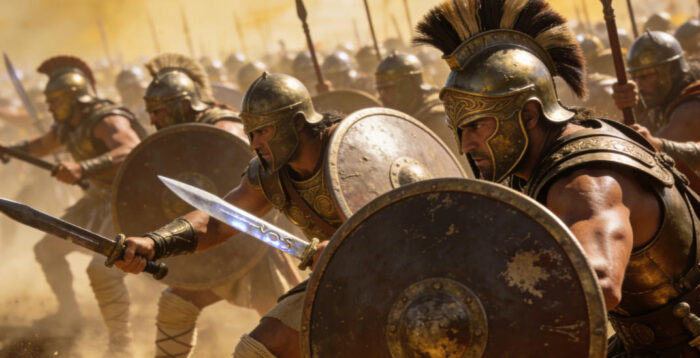
The Xiphos sword was a critical tool for hoplite soldiers, complementing the doru spear used in phalanx formations. Once the spear was broken, lost, or too cumbersome in close quarters, the Xiphos became the primary weapon for hand-to-hand combat. Its short length allowed warriors to strike efficiently from behind shields, delivering lethal slashes and precise thrusts.
Greek military strategies emphasized teamwork, discipline, and formation integrity. The Xiphos contributed to these strategies by offering soldiers a reliable secondary weapon capable of swift attacks during tight battlefield maneuvers. The sword was also depicted on pottery, statues, and mosaics, reinforcing its cultural significance as a symbol of heroism and martial skill.
Collectible and Cultural Value
Today, Xiphos replicas are highly sought after by collectors, historians, and martial arts enthusiasts. Modern reproductions are crafted from high-carbon steel or authentic iron, emulating the techniques of ancient Greek blacksmiths. Collectors appreciate the historical accuracy, ergonomic design, and aesthetic appeal of these swords.
Many enthusiasts also use battle-ready Xiphos swords for reenactments, historical martial arts practice, and museum displays, celebrating the legacy of Greek weaponry. Owning a Xiphos allows one to connect tangibly with ancient Greek military history, making it both a valuable collectible and a functional weapon for educational purposes.
Why the Xiphos Remains Legendary
The Xiphos sword endures as a symbol of ancient Greek military excellence and craftsmanship. Its compact yet deadly design reflects the balance of power and precision that defined Greek warfare. Beyond its battlefield use, the Xiphos represents valor, cultural identity, and artistic achievement in classical antiquity.
Whether studied for its historical context, collected for its artistic value, or wielded in historical reenactments, the Xiphos sword remains one of the most iconic and respected ancient Greek swords. Its enduring legacy continues to inspire scholars, enthusiasts, and collectors worldwide.
https://www.coolkatana.com