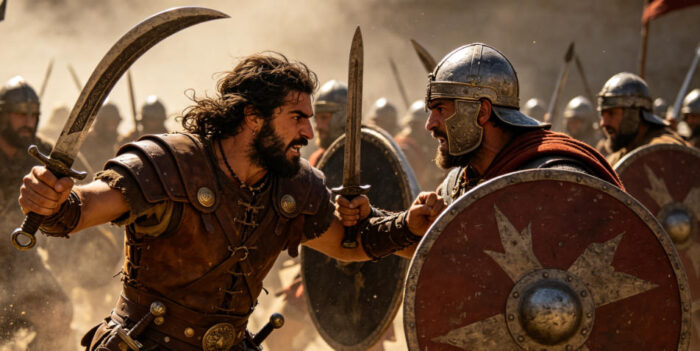
Dacian Falx: The Curved Weapon That Challenged Rome
Dacian Falx: The Ancient Curved Weapon That Terrified Roman Legions
The Dacian Falx stands as one of the most notorious weapons in ancient military history, famed for its devastating curved blade and psychological impact on Roman forces. More than just a tool of war, this ancient curved weapon symbolized the fierce independence, tactical ingenuity, and warrior spirit of the Dacians, who inhabited the lands of modern-day Romania. In this comprehensive guide, we explore the history, construction, battlefield tactics, and enduring legacy of the Dacian falx, as well as its influence on modern historical reenactments and weapon enthusiasts worldwide.
Origins and Historical Context
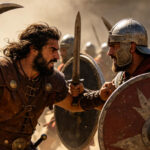
The Dacian falx emerged during the 1st century BC and became a defining weapon of the Dacian tribes. The Dacians, known for their resilience and martial prowess, used this curved sword to great effect during the Dacian Wars (101–106 AD) against the Roman Empire under Emperor Trajan. Roman historians, including Dio Cassius and Jordanes, described the falx as a terrifying weapon capable of slicing through armor and shields with frightening ease. Its use forced the Roman legions to adapt their armor, shields, and battle formations, highlighting the falx’s strategic impact on ancient warfare.
Beyond its battlefield significance, the falx also reflected Dacian culture and craftsmanship, embodying both martial skill and artistic expression. Many Dacian warriors took pride in their falx, treating it not only as a weapon but also as a symbol of tribal identity and honor.
Design and Engineering Excellence
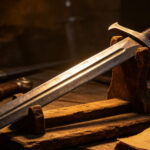
The Dacian falx is instantly recognizable for its distinctive inward-curving blade, which maximized cutting power while maintaining flexibility. There were two main variants:
- One-handed falx: Shorter and lighter, often paired with a shield. Ideal for swift strikes, close combat, and tactical versatility.
- Two-handed falx: Longer and heavier, capable of delivering overhead and slicing attacks that could penetrate Roman armor or disable multiple enemies in one swing.
Typically 24–36 inches in blade length, the falx was often iron-forged using advanced metallurgical techniques, giving it durability without sacrificing sharpness. Handles were crafted from hardwood or reinforced with metal fittings, ensuring a firm grip during intense combat. Some elite warriors even customized their falx with engravings or decorative elements, demonstrating the combination of practicality and artistry in Dacian weaponry.
Battlefield Tactics Against Roman Legions
The Dacian falx was more than a weapon—it was a tactical innovation that challenged the famed Roman military machine. Its curved blade allowed warriors to strike over shields and helmets, exploiting weaknesses in the Roman formation. Dacian forces often employed the falx in combination with:
- Ambushes and guerrilla tactics: Using terrain to their advantage.
- Flanking maneuvers: Breaking Roman lines from unexpected angles.
- Psychological warfare: Instilling fear with the weapon’s sheer lethality and distinctive silhouette.
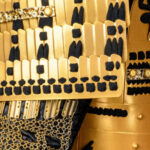
Roman soldiers were initially unprepared for the falx, leading to high casualties and shaken morale. Over time, Rome adapted by reinforcing helmets with crossbars and strengthening shields, showing how this weapon influenced ancient military strategy.
Cultural and Symbolic Significance
The falx held deep symbolic meaning for the Dacians. Beyond being a battlefield instrument, it represented strength, courage, and resistance against one of the most powerful empires of the ancient world. The weapon’s prominence in Dacian society reflects the tribe’s warrior ethos and the high value placed on martial skill.
Dacian swordsmen trained rigorously from a young age, honing their technique to maximize the falx’s devastating potential. Historical accounts describe ritualistic and ceremonial uses, suggesting that the weapon also played a role in tribal ceremonies and status display.
Modern Legacy and Reenactment
Today, the Dacian falx continues to captivate historians, blacksmiths, and collectors. Accurate replicas are crafted for:
- Historical reenactments and battlefield demonstrations
- Museum exhibits and educational programs
- Video games, films, and documentaries, where the falx’s iconic curved blade inspires awe and authenticity
The weapon’s influence extends into modern martial arts and swordsmanship studies, providing insights into ancient European combat techniques and weapon engineering. For collectors and enthusiasts, owning a Dacian falx replica is not just about history—it’s a tangible connection to the courage and innovation of ancient warriors.
Conclusion
The Dacian falx was a revolutionary weapon that reshaped ancient combat, striking fear into Roman legions and forcing tactical evolution. Its unique curved design, metallurgical craftsmanship, and tactical effectiveness make it one of the most iconic weapons in military history. Today, it remains a symbol of Dacian warrior culture, resilience, and ingenuity, inspiring historians, reenactors, and enthusiasts around the world to explore the enduring legacy of this ancient curved weapon.
https://www.coolkatana.com/