The Naginata: Symbol of Elegance, Strength, and Tradition
The naginata (薙刀) is one of Japan’s most iconic traditional weapons, originating in the Heian period (794–1185 AD). With its distinctive design—featuring a curved blade mounted on a long wooden pole—the naginata combines the cutting power of a sword with the extended reach of a spear. Typically over 2 meters in length, this formidable weapon allowed warriors to deliver sweeping, wide-range strikes from a safe distance.
On the battlefield, the naginata was especially effective in halting cavalry charges and dispersing close infantry formations. It proved invaluable in castle defense and rugged terrain. Early samurai warriors mastered its use to deliver fluid, powerful attacks—earning the naginata the nickname “the sweeping monarch” of combat.
While it flourished during the Kamakura (1185–1333) and Muromachi (1336–1573) eras, evolving warfare led to the rise of other weapons like the tachi and shorter blades. But the naginata’s story didn’t end there—it found a new life in the hands of an unlikely group: women of the samurai class.
Why Is the Naginata Associated with Women?
Though originally used by male warriors, over time, the naginata became widely recognized as a “woman’s weapon” in Japanese culture. This association developed through centuries of shifting societal roles and values.
1. Defense for Samurai Households
During Japan’s Sengoku period (1467–1615), samurai men were often away on campaigns, leaving their homes vulnerable. In their absence, wives and daughters were trained in self-defense, with the naginata being the preferred weapon. Its long reach gave women the advantage of countering attackers at a distance, neutralizing threats from swords or spears.
2. Symbol of Female Nobility and Virtue
By the Edo period (1603–1868), the naginata had become more than a weapon—it was a status symbol. Often included in bridal dowries among upper-class families, it represented a noblewoman’s grace, discipline, and readiness to protect her family. It came to signify loyalty, refinement, and female martial virtue.
3. Continued Use in Modern Martial Arts
Even in contemporary Japan, the naginata is taught in many girls’ schools as part of traditional martial arts. It is seen as a path to building composure, self-discipline, and inner strength. Its cultural link to feminine resilience has only grown stronger, especially through the sport of naginatadō, practiced under strict rules with bamboo or wooden training weapons.
Onna-Bugeisha: Legendary Female Warriors with the Naginata
Throughout Japanese history, there were many remarkable female warriors known as onna-bugeisha who wielded the naginata with incredible skill.
Tachibana Ginchiyo, heiress of the Tachibana clan, was known for her leadership and martial prowess. She organized female troops and defended her clan’s lands with bravery and tactical intelligence—her naginata became an extension of her spirit.
Kaihime, another legendary figure, rose to fame during the Siege of Oshi Castle. She led women in battle and boldly charged into enemy ranks with her naginata, shocking and demoralizing enemy forces.
Inspired by such heroines, samurai families continued training their daughters in the art of the naginata—not only for defense, but as part of their moral education and spiritual refinement.
Even during the peaceful Edo period, the tradition lived on in noble households and temple schools, where training with the naginata symbolized cultured womanhood and quiet strength.
Structure and Craftsmanship: What Makes a Real Naginata?
The naginata is a unique blend of utility and aesthetics, composed of several key parts:
Blade (Naginata-gatana)
The curved blade, often forged from 1095 high carbon steel, has a deeper arc than that of standard katanas, allowing for more effective slicing. Clay tempering produces a distinctive hamon line, enhancing both its function and visual appeal. Blades are sometimes folded for strength and to exhibit the artisan’s skill.
Tsuba (Guard) and Nakago (Tang)
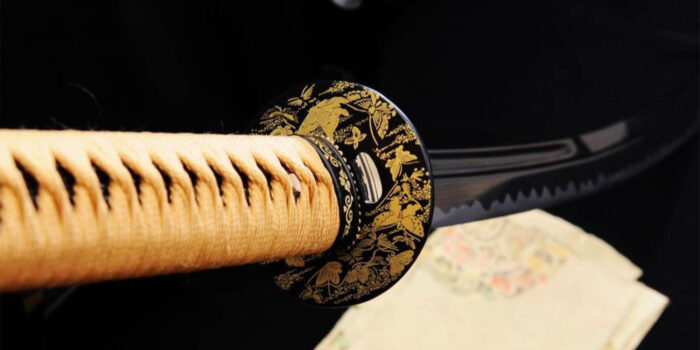
The tsuba is a decorative and protective guard, often engraved with traditional motifs or clan symbols. The nakago, or tang, ensures the blade is securely attached to the pole, maintaining stability during combat.
Shaft (Pole)
Usually made from strong woods like oak, the shaft ranges from 120–240 cm in length and is often wrapped with rayskin or leather for grip. The balance of the shaft allows for smooth, flowing movements and precise strikes.
Saya (Scabbard)
The scabbard protects the blade and enhances its visual beauty. High-end models may feature rayskin scabbards, whose unique textures shimmer in light, reflecting both bravery and sophistication.
A masterfully crafted naginata is more than a weapon—it is a cultural artifact that embodies the Japanese spirit of perfection, discipline, and beauty.
A Legacy Revived: The Naginata in Modern Japan
Though long retired from actual warfare, the naginata remains deeply embedded in Japanese culture, finding renewed life in three major areas:
1. Martial Arts and Education
Modern Naginatadō is practiced competitively in schools and dojos across Japan. Under the All Japan Naginata Federation, practitioners focus on precision, etiquette, and self-control. The sport fosters values such as respect, courage, and perseverance, especially among women.
2. Pop Culture and Media
The naginata continues to appear in anime, films, and games as a symbol of grace and strength. Characters in series like Demon Slayer, Rurouni Kenshin, and Touken Ranbu wield the naginata to highlight their elegance and combat prowess—fueling new generations of interest in the weapon.
3. Sword Collecting and Replica Craftsmanship
With the resurgence of interest in traditional weapons, hand-forged naginata swords have become prized collectibles. This Hand Forged Japanese Naginata (1095 Carbon Steel with Rayskin Saya) stands as a testament to authentic craftsmanship and artistry:
Material: High-carbon 1095 steel for sharpness and durability
Forging: Clay tempered with a visible hamon line
Scabbard: Premium rayskin saya with natural, elegant texture
Construction: Full tang for balance and reliable performance
Display-worthy: Ideal for dojos, tea rooms, or collector showcases
Whether used for practice, decoration, or as a meaningful gift, this naginata channels the soul of the samurai era, blending functionality with cultural refinement.
Experience the Spirit of the Naginata
From the windswept battlefields of feudal Japan to today’s martial arts halls and collector galleries, the naginata remains a powerful symbol of Japanese heritage, feminine strength, and artisan excellence.
Explore our Hand Forged Japanese Naginata Sword today and connect with a timeless legacy that balances combat tradition, artistic beauty, and cultural pride.
SHOP NOW
Hand Forged Japanese Naginata Sword 1095 Carbon Steel Rayskin Saya