Traditional Chinese Weapons: Swords, Spears, and Martial Arts History
Traditional Chinese Weapons: Swords, Spears, and Martial Arts History
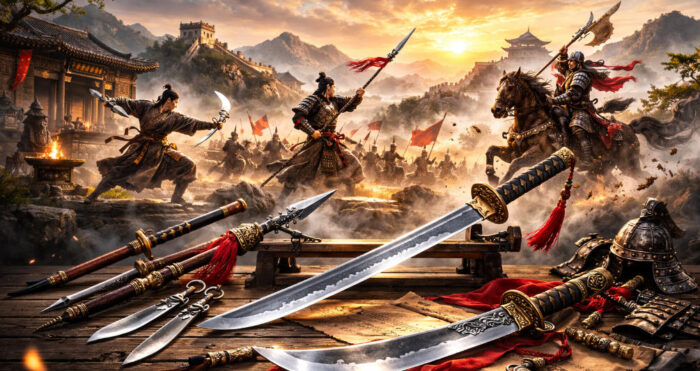
Traditional Chinese weapons represent thousands of years of military evolution, martial arts philosophy, and cultural heritage. From battlefield spears to elegant swords used in kung fu, these weapons were not only tools of war but also symbols of discipline, honor, and martial skill.
Chinese martial arts developed alongside these weapons, creating sophisticated combat systems that emphasized technique, strategy, and weapon mastery. Today, many of these traditional Chinese weapons remain central to kung fu training, wushu performance, and historical weapon studies.
This guide explores the history, design, and martial arts applications of Chinese swords, spears, and polearms, revealing how these iconic weapons shaped Chinese martial culture.
The History of Traditional Chinese Weapons
The origins of Chinese weaponry can be traced back thousands of years to early bronze and iron weapons used during ancient dynasties. As metallurgy and warfare evolved, weapons became more specialized and refined.
Many weapons that appear in modern Chinese martial arts were originally designed for real battlefield combat. Over time, they transitioned from military equipment to tools for training, self-defense, and cultural preservation.
Several weapons eventually became known as the “Four Major Weapons of China”:
Jian (剑) – the straight double-edged sword
Dao (刀) – the single-edged saber or broadsword
Qiang (枪) – the spear
Gun (棍) – the staff
These weapons were regarded as the foundation of traditional martial training and appear across many classical kung fu styles.
The Jian: The Classic Chinese Straight Sword
The jian is one of the most famous traditional Chinese swords and is often referred to as the “Gentleman of Weapons” due to its association with scholars and martial artists.
Design and Characteristics
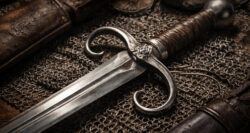
The jian features a straight, double-edged blade designed for both cutting and thrusting. Historically, many jian swords ranged from roughly 45 to 80 cm in blade length and were relatively lightweight, allowing for precise and fluid movements.
Key characteristics include:
Straight double-edged blade
Balanced weight for precise control
Narrow blade optimized for thrusting attacks
Elegant guard and pommel design
Because of its balanced structure, the jian is ideal for refined sword techniques that emphasize precision, agility, and timing.
Martial Arts Applications
The Chinese straight sword is widely used in traditional martial arts such as:
Tai Chi sword (Taiji Jian)
Classical Wushu sword forms
Internal martial arts training
Sword techniques focus on:
thrusting attacks
circular deflections
flowing footwork
coordinated body mechanics
Because of its technical complexity, mastering the jian often requires years of training.
The Dao: The Chinese Broadsword
The dao is another iconic weapon in Chinese history and is often described as the “General of Weapons.”
Unlike the jian, the dao features a single-edged blade primarily designed for slashing and chopping attacks.
Historical Development
The dao became especially popular during the Han dynasty, when cavalry units favored it for its durability and cutting power.
Over time, many variations appeared, including:
Dadao – large two-handed war sword
Miaodao – long two-handed saber
Changdao – extended cavalry saber
Wodao – Ming dynasty sword influenced by Japanese blades
These weapons were widely used in military campaigns and later incorporated into martial arts training.
Dao Techniques in Kung Fu
The dao is known for powerful, aggressive movements. Common techniques include:
sweeping cuts
downward chopping strikes
spinning attacks
defensive blocks
Many martial arts systems teach Chinese broadsword forms, making the dao one of the most recognizable weapons in modern wushu demonstrations.
The Qiang: The King of Weapons
Among all traditional Chinese weapons, the qiang (spear) holds a special status in martial arts and military history.
It is widely known as the “King of Weapons.”
Structure and Features
The Chinese spear typically consists of:
a long wooden shaft
a leaf-shaped steel spearhead
a distinctive red tassel beneath the blade
The tassel is not merely decorative. Historically, it served several purposes:
distracting opponents during combat
preventing blood from running down the shaft
improving weapon visibility during movement
Spears could range from 2.5 to 6 meters in length, depending on battlefield use.
Spear Techniques in Chinese Martial Arts
Spear training emphasizes:
speed and reach
precise thrusting attacks
circular deflections
continuous forward pressure
Because spear techniques teach coordination, power generation, and distance control, many martial arts systems use spear training as a foundation for other weapon skills.
The Ji: Ancient Chinese Polearms
The ji is a unique polearm that combines features of a spear and an axe-like blade.
Historically used for over 3,000 years, the ji served infantry, cavalry, and chariot warriors in ancient Chinese armies.
Combat Capabilities
The ji offered several offensive options:
thrusting with the spear tip
cutting with the side blade
hooking or pulling opponents
striking with the shaft
This versatility made it a powerful battlefield weapon and a precursor to many later Chinese polearms.
Butterfly Swords and Southern Kung Fu Weapons
In southern China, shorter weapons were developed for close-quarters combat. One of the most famous examples is the butterfly sword (hudiedao).
Design
Butterfly swords are short, single-edged blades usually used in pairs. They are compact enough to be concealed and are ideal for fast, aggressive fighting styles.
Typical characteristics include:
short blades roughly the length of the forearm
protective hand guards
paired use for trapping and blocking
Martial Arts Systems
Butterfly swords are strongly associated with southern martial arts such as:
Wing Chun
Hung Gar
Choy Li Fut
These styles emphasize rapid strikes, close-range defense, and coordinated dual-weapon techniques.
Traditional Chinese Weapons in Martial Arts Today
Although these weapons originated on the battlefield, they remain important in modern martial arts training.
Many martial artists practice weapons for several reasons:
Skill Development
Weapon training improves:
coordination
timing
body mechanics
tactical awareness
Cultural Preservation
Traditional weapons preserve centuries of Chinese history, craftsmanship, and martial philosophy.
Performance and Competition
In modern wushu competitions, weapon forms featuring swords, spears, and polearms showcase speed, flexibility, and dramatic martial techniques.
The Cultural Legacy of Chinese Martial Weapons
Traditional Chinese weapons are deeply embedded in Chinese literature, folklore, and martial arts legends. Heroes from classical novels and historical epics are often associated with iconic weapons such as legendary swords or polearms.
Today, these weapons continue to inspire:
martial arts practitioners
historical weapon collectors
kung fu enthusiasts
film and game creators
Whether studied as historical artifacts or practiced in martial arts training, traditional Chinese swords and weapons remain powerful symbols of discipline, strategy, and martial excellence.
https://www.coolkatana.com/