Urumi Flexible Sword Guide: History, Combat & Martial Arts Secrets
Urumi Flexible Sword Explained: History, Techniques, and the Deadly Art of the Indian Whip Sword
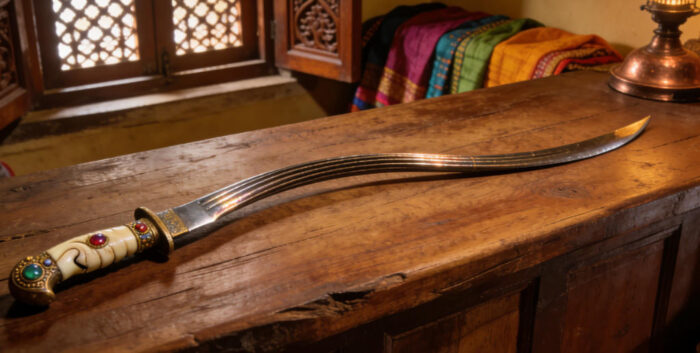
The Urumi is one of the most unusual and visually stunning weapons ever created. Often called the flexible sword, Indian whip sword, or sword whip, the Urumi combines the cutting power of a blade with the fluid motion of a whip. Unlike traditional swords such as the katana, longsword, or saber, the Urumi features a long, flexible steel blade that bends and coils during combat.
For martial arts enthusiasts, weapon collectors, and historical weapon fans, the Urumi sword represents a perfect blend of danger, elegance, and advanced combat skill. Its flowing attacks, circular movements, and intimidating speed make it one of the most difficult weapons in the world to master.
Today, the Urumi continues to attract attention through Indian martial arts, fantasy games, historical documentaries, and action movies, where its impossible-looking movements often leave audiences stunned.
What Is an Urumi?
The Urumi is a traditional weapon from South India, especially associated with the ancient martial art of Kalaripayattu. The weapon usually consists of one or more thin, flexible steel blades attached to a handle similar to a sword hilt.
Unlike a normal sword that stays rigid during combat, the Urumi moves like a ribbon or whip. When swung correctly, the blade creates rapid circular attacks capable of striking opponents from multiple angles at once.
Some versions contain:
- A single flexible blade
- Dual blades for advanced fighters
- Multiple steel ribbons attached to one hilt
- Extra-long blades for crowd combat demonstrations
Because the blade is razor sharp and constantly moving, the wielder must maintain continuous motion. Stopping incorrectly can cause the blade to recoil toward the user, making the Urumi one of the most dangerous weapons for inexperienced fighters.
Origins and History of the Urumi Sword
The history of the Urumi flexible sword dates back several centuries and is deeply connected to Kalaripayattu, one of the oldest martial arts systems in the world. Historians believe the weapon developed in the southern regions of Kerala and Tamil Nadu, where warriors trained in highly advanced armed combat techniques.
In ancient India, warriors carried a wide range of weapons including spears, shields, daggers, bows, and swords. The Urumi stood apart because of its unpredictable attack patterns and ability to bypass defensive formations.
The weapon became especially useful against enemies using shields or rigid armor. Since the blade could curve and wrap around obstacles, it allowed attacks from unexpected directions. This flexibility gave skilled fighters a tactical advantage during close combat encounters.
Over time, the Urumi became more than just a battlefield weapon. It evolved into a symbol of martial mastery and discipline. Only highly trained practitioners were allowed to use it, as improper handling could easily injure the wielder or nearby allies.
Even today, many traditional martial arts schools consider the Urumi an advanced-level weapon reserved for experienced students.
Urumi and Kalaripayattu Martial Arts
No discussion of the Indian whip sword is complete without mentioning Kalaripayattu. Often described as one of the oldest surviving martial arts systems, Kalaripayattu combines strikes, grappling, acrobatics, meditation, and weapon training into a complete combat discipline.
Within Kalaripayattu, the Urumi is viewed as a high-level weapon because it demands:
- Extreme body coordination
- Fast reflexes
- Rhythm and timing
- Spatial awareness
- Full-body flexibility
Students usually spend years mastering sticks, spears, and rigid swords before they are permitted to train with the Urumi. Beginners often practice with cloth or dull training versions to learn movement patterns safely.
The spinning techniques used with the Urumi are both offensive and defensive. Continuous circular motion creates a dangerous attack zone around the fighter, making it difficult for opponents to approach. Skilled practitioners can change direction instantly, transitioning between defense and attack without stopping the blade’s momentum.
Design and Construction of the Urumi
The construction of the Urumi sword is unlike almost any other weapon in history. Traditional versions are forged from high-carbon steel, allowing the blade to remain flexible while still maintaining a sharp edge.
Important design features include:
Flexible Steel Blade
The defining feature of the Urumi is its long, whip-like blade. Depending on the style, the blade may range from 4 to 7 feet in length. Some ceremonial versions are even longer.
Sword-Style Handle
Although the blade behaves like a whip, the hilt resembles a traditional sword grip, often including a crossguard to protect the user’s hand during spinning attacks.
Multiple Blade Variants
Advanced versions may contain several flexible blades attached to the same hilt. These multi-bladed Urumis dramatically increase attack range and visual intensity but require incredible control.
Portable Design
One of the most unique aspects of the Urumi is that the flexible blade can be wrapped around the wielder’s waist like a belt when not in combat. This made it surprisingly practical for warriors traveling long distances.
How the Urumi Is Used in Combat
Using the flexible sword effectively requires constant motion. Unlike standard swords that rely on direct slashes or thrusts, the Urumi generates power through speed, centrifugal force, and fluid movement.
Common techniques include:
Circular Slashes
The user swings the blade in wide circles around the body, creating a moving perimeter of razor-sharp steel. These attacks can strike multiple opponents or force enemies to maintain distance.
Overhead Whip Attacks
The blade rotates above the fighter before snapping downward at high speed, similar to a whip crack.
Entangling Movements
Because of its flexibility, the Urumi can wrap around shields, arms, or weapons, potentially bypassing defensive positions.
Continuous Flow Combat
The weapon is rarely stopped completely during battle. Fighters maintain uninterrupted motion to preserve control and momentum.
Dual Urumi Techniques
Elite practitioners sometimes wield two Urumis simultaneously, producing an overwhelming storm of spinning steel that is as dangerous to watch as it is to fight against.
Why the Urumi Is So Difficult to Master
The Urumi is widely considered one of the hardest weapons in martial arts history to learn. A beginner can easily lose control of the blade, leading to serious injury.
Several factors contribute to its difficulty:
- The blade changes direction unpredictably
- Timing errors can cause self-inflicted wounds
- Continuous motion requires high stamina
- Spatial awareness is essential in crowded environments
- Multi-blade versions increase complexity dramatically
Unlike traditional swords where precision and structure dominate, the Urumi depends heavily on fluid movement, rhythm, and adaptability. Many martial artists compare learning the weapon to mastering a dangerous dance.
Urumi in Movies, Games, and Pop Culture
In recent years, the Urumi whip sword has become increasingly popular in entertainment media. Action films and fantasy games frequently use the weapon because of its unique visual style and exotic reputation.
The flowing attacks of the Urumi create cinematic fight scenes that look almost supernatural. Video games inspired by historical combat or fantasy weapon systems often include whip swords modeled after the Urumi because they stand out from standard weapon types.
Fans of fantasy RPGs, anime-inspired combat systems, and martial arts cinema are especially fascinated by the weapon’s combination of elegance and danger. Searches for terms like “whip sword weapon,” “flexible blade sword,” and “real sword whip” continue growing as more audiences discover the Urumi online.
Urumi vs Traditional Swords
Comparing the Urumi to standard swords reveals just how unique the weapon truly is.
WeaponCombat StyleStrengthsWeaknessesUrumiFlexible, flowing, wide-range attacksUnpredictable, long reach, crowd controlExtremely difficult to controlKatanaPrecision cuttingSpeed and sharpnessLimited rangeLongswordBalanced offense and defenseVersatilityHeavier movementSaberFast slashing attacksCavalry effectivenessLess flexible attack angles
The Urumi sacrifices stability for flexibility and intimidation. In the hands of a master, however, it becomes one of the most visually overwhelming weapons ever designed.
Modern Interest in the Urumi
Today, collectors, martial artists, and historical weapon enthusiasts continue searching for authentic Urumi swords and traditional training methods. Interest has increased thanks to social media videos, martial arts demonstrations, and historical weapon channels showcasing the weapon’s unique movement patterns.
Modern practitioners appreciate the Urumi not only as a combat tool, but also as an artistic expression of discipline, control, and cultural heritage. Demonstrations often resemble a blend of swordsmanship and dance, with the blade spinning in mesmerizing arcs around the performer.
For many weapon enthusiasts, the Urumi represents the ultimate test of coordination and skill — a weapon that demands total focus from the person wielding it.
Conclusion
The Urumi flexible sword remains one of the most extraordinary weapons in martial arts history. Combining the cutting edge of a sword with the fluid unpredictability of a whip, it challenges everything people normally expect from bladed combat.
Its deep connection to Kalaripayattu, advanced combat techniques, and breathtaking movement style continue to fascinate martial artists and weapon collectors around the world.
Whether viewed as a historical battlefield weapon, a martial arts masterpiece, or a stunning performance tool, the Urumi stands as a powerful symbol of skill, precision, and fearless control.
https://www.coolkatana.com